

Ask PC builders which case brand they’d trust with a showcase build and two names dominate the conversation: Lian Li and Corsair. Lian Li made its name on aluminum craftsmanship and the O11 series that redefined the glass-panel showcase case. Corsair built a loyal following on airflow-first designs, tidy cable management, and an ecosystem of fans and cooling that clicks together. Both sit in the premium tier, and both reward the buyer who cares about how a build looks and breathes. For related decisions, our guides to the best mid-tower cases and the best PC cases for airflow add useful context to this matchup.
Matchup at a glance
The core split between these two brands is philosophy. Lian Li leans into premium materials and clean, show-off aesthetics, with dual-chamber layouts and expansive tempered glass that put your components on display. Corsair leans into airflow engineering and integration, designing cases around its fan and cooling lineup so the whole system works as a unit. Neither approach is wrong. One prioritizes the visual and the build experience, the other prioritizes thermals and a plug-and-play ecosystem.
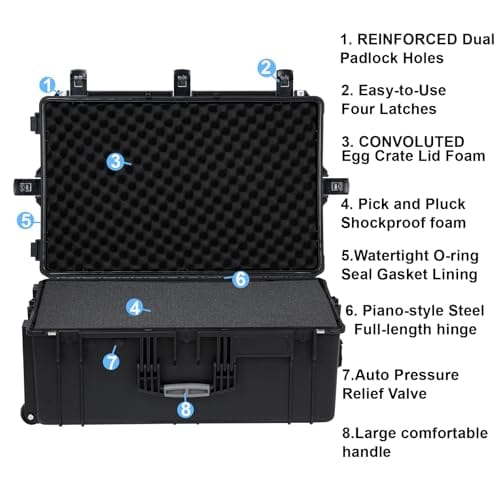
We’ll anchor the Lian Li side to a real, current case, the O11 Vision Compact in white, a steel-and-tempered-glass ATX mid-tower at $124.99 with a 4.4 rating that supports back-connect motherboards. For the second product in this comparison, the available listing is a Regetek rolling hard transport case rather than a Corsair PC chassis, so we’ll be transparent: that item is a wheeled equipment case for hauling gear, not a Corsair tower. We’ll compare the brand philosophies honestly and note where the products genuinely fit.
Spec sheet showdown
| Spec | Lian Li philosophy | Corsair philosophy | Lian Li O11 Vision Compact | Regetek Rolling Hard Case |
|---|---|---|---|---|
| Core focus | Materials, showcase looks | Airflow, ecosystem | Glass showcase mid-tower | Gear transport, protection |
| Material | Aluminum and glass | Steel and mesh | Steel, tempered glass | Hard shell with foam |
| Form factor | Dual-chamber, various | Mid and full tower | ATX mid-tower | 32.5 x 20.5 x 13 in case |
| Price | Mid to premium | Budget to premium | $124.99 | $279.99 |
| Rating | Varies by model | Varies by model | 4.4 | 4.6 |
The table shows the honest picture. The brand columns capture design philosophy, the O11 Vision Compact is a concrete Lian Li showcase case, and the Regetek is a transport case that shares the word “case” but serves a totally different job. If you’re cross-shopping a PC chassis, the O11 Vision Compact is the relevant product here. The Regetek is what you’d buy to safely move a finished rig to a LAN party, not to house it on your desk.
Lian Li strengths
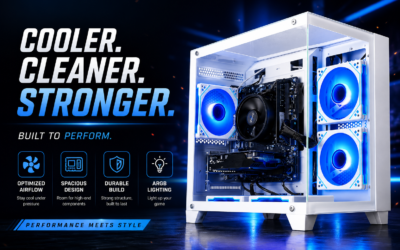
Lian Li’s reputation rests on build quality and looks, and the O11 line is the poster child. The O11 Vision Compact pairs steel with generous tempered glass so your components are on full display, which is exactly what a showcase builder wants. Its back-connect support means it works with hidden-connector motherboards, routing cables behind the tray for a clean, wire-free front view. At $124.99 with a 4.4 rating, it delivers that premium showcase experience without reaching flagship pricing, and the white finish suits bright, themed builds.
The tradeoff with glass-heavy showcase cases is that airflow takes more planning. A design built to look stunning through glass can need well-placed intake fans to keep temperatures in check, so you’ll want to think about fan layout rather than assuming the case breathes effortlessly out of the box. Lian Li builders often pair these cases with quality fans to strike the balance. If aesthetics and material quality top your list, though, this is the brand that delivers.
Corsair strengths
Corsair’s edge is airflow and ecosystem integration. Its popular cases favor mesh front panels and thoughtful fan placement so heat escapes efficiently, and because Corsair also makes fans, coolers, RAM, and software, everything tends to work together with less fuss. For a builder who wants a system that manages cooling and lighting through one app, that integration is genuinely convenient. Corsair also spans a wide price range, so you can buy into the ecosystem at budget or premium levels.
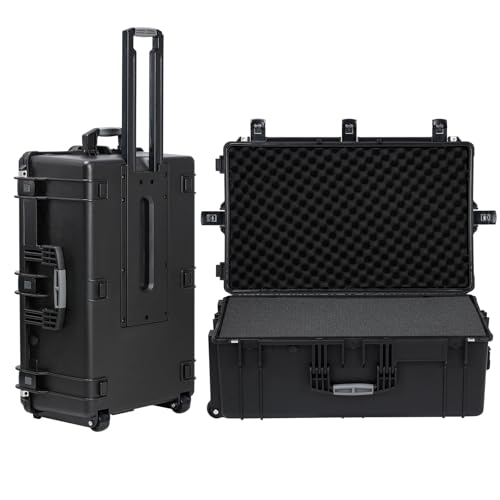
Now the transparent part. The second product available for this comparison isn’t a Corsair PC case, it’s the Regetek rolling hard case, a $279.99 wheeled transport case with a 4.6 rating measuring 32.5 by 20.5 by 13 inches, with foam interior, a retractable handle, and shockproof, waterproof protection. It’s excellent for hauling equipment, cameras, or tools, and if you transport a PC or gear to events, it’s a legitimately useful case. It just isn’t a Corsair chassis, so we won’t pretend it houses a build on your desk.
Pros
- IP67 seal with air-lock valve keeps kit dry during rain, dust, or airline handling
- Pick-and-pluck foam in four layers adapts to cameras, lenses, tools, or medical gear
- Dual padlock holes on the latches allow TSA locks for checked-luggage transport
Cons
- No verified owner fedback at time of writing, so long-term wheel and latch durability is unproven
- Case with foam weighs 32.73 lb empty, which pushes loaded weight near airline checked limits
- Standard-density pluck foam is less protective than custom cut foam for heavy optics or precision instruments
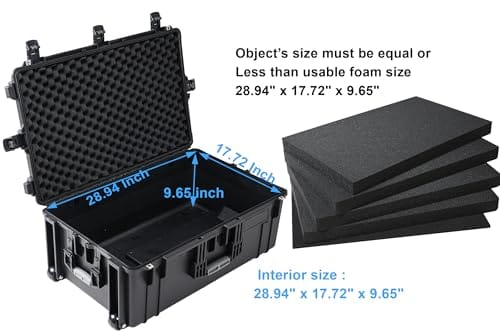
The Regetek Rolling Hard Case is a mid-size wheeled transport case in the Pelican-style category, measuring 32.5 by 20.5 by 13 inch externally with a 28.94 by 17.72 by 9.65 inch usable interior. It targets photographers, drone operators, field service techs, and musicians who need airline-checkable protection for fragile gear.
The defining feature is the IP67 rating paired with a full-length steel hinge and double-latch closure. Cases at this size and seal class typically survive shallow submersion to about 3.3 ft, and the air-lock valve equalizes pressure after altitude changes so the lid does not vacuum shut. Owner feedback is unavailable, so real-world seal longevity cannot be confirmed.
Trade-offs are typical at this tier. The 32.73 lb empty weight with foam eats into airline allowances before gear is loaded, and standard-density pick-and-pluck foam is a compromise between adaptability and impact absorption compared with custom cut foam. Wheels and retractable handles on cases in this class are also the most common long-term failure points.
Buy this if you need a lockable, waterproof rolling case sized for a full mirrorless kit, mid-size drone, or field tolset. Skip this if your payload exceeds the28.94 inch interior length, or if you need documented drop-test certification for professional broadcast use.
Dimensions and weight: Exterior measures 32.5 by 20.5 by 13 inch with an internal usable volume of 28.94 by 17.72 by 9.65 inch. Total weight with foam is 32.73 lb, which is consistent with rotomolded polymer cases in this size class and leaves useful payload room for airline checked baggage.
Sealing and ingress protection: The case is rated IP67 with an O-ring gasket, watertight buckles, and an air-lock pressure equalization valve. Manufacturer states safe submersion to 3.3 ft, and the valve prevents lid suction after temperature or altitude changes during air transit.
Foam configuration: Interior includes four pick-and-pluck layers of standard density foam, one top egg-crate layer, and one bottom pad. The pluck grid lets you shape custom cavities without a knife, though density is not specified in pounds per cubic foot.
Structure and security: Shell uses high-impact polymer with one full-length steel hinge instead of two-point hinges, a double-latch system, dual padlock holes for redundant locking, a heavy-duty top handle, integrated whels, and a retractable pull handle. Waranty is stated at 2 years including replacement parts.
Real-world scenarios
The showcase build
If you’re building a rig meant to be seen, glowing on your desk through glass, Lian Li’s philosophy wins, and the O11 Vision Compact is purpose-built for it. Steel structure, tempered glass, and back-connect cable routing give you that clean, gallery look. Just plan your fan layout so the showcase design stays cool under gaming load.
The airflow-first build
For a builder who cares more about temperatures than looks, Corsair’s mesh-forward designs and cooling ecosystem make sense. A high-airflow case with matched fans keeps a hot CPU and GPU in check with less tuning. This is where Corsair’s integration pays off, since the parts are designed to cooperate through one control app.
Transporting your PC or gear
Here’s where the Regetek transport case genuinely fits. If you take a desktop to LAN events, or you haul cameras, tools, or equipment, its foam-lined, shockproof, waterproof shell on wheels protects fragile gear far better than a cardboard box. It’s not a home for your build, it’s how you move one safely. Different job, real value.
The compact desk setup
If desk space is tight but you still want a showcase, the O11 Vision Compact’s mid-tower footprint fits ATX hardware without sprawling. It’s the pick for a clean, visible build that doesn’t dominate the desk. Corsair also offers compact options, so either brand can serve a smaller space depending on the exact model you choose.
Pricing and availability
Both case brands span a broad range. Lian Li sits mid to premium, with the O11 Vision Compact landing at an accessible $124.99 for a showcase mid-tower. Corsair ranges from budget mesh boxes to premium flagships, so you can enter its ecosystem at many price points. Both are widely stocked at major retailers, and both hold value thanks to strong reputations.
The Regetek transport case, at $279.99, is priced as the specialized gear-hauling product it is, not as a desktop chassis. If your need is protecting equipment in transit, that price buys a rugged wheeled case. If your need is housing a gaming PC, the O11 Vision Compact at $124.99 is the relevant spend. Keep the two jobs separate when you budget, since they solve completely different problems.
Which to buy
For a desktop chassis, this really comes down to priorities. Choose Lian Li if materials, glass, and a clean showcase look matter most, and the O11 Vision Compact delivers exactly that at $124.99 with back-connect support for a wire-free front. Choose the Corsair philosophy if airflow engineering and a matched cooling-and-lighting ecosystem are your priority, since that integration simplifies building and tuning a cool, quiet system.
If your actual need is transporting a PC or equipment rather than housing it, the Regetek rolling hard case at $279.99 is the honest recommendation, with its foam-lined, shockproof, waterproof, wheeled design earning its 4.6 rating for protecting gear on the move. Match the product to the job. For a showcase build on your desk, the Lian Li O11 Vision Compact is the pick worth reaching for, and our guide to the best budget PC cases for a showcase build has more options to compare.

Pros
- Patented three-panel tempered glass exposes front, top, and left views of the build.
- Native back-connect motherboard support for hiden 24-pin, EPS, and PCIe cabling.
- Second chamber hides side-mounted AIO tubing for a cleaner primary compartment.
- Swappable top mesh panel suports a 360mm AIO when thermals take priority over glass.
Cons
- Limited owner feedback at time of writing makes long-term reliability signal thin.
- Full specs (GPU length, cooler height, fan count) not published in source data.
- Back-connect layout requires a compatible motherboard, narowing part selection.
The Lian Li O11Vision Compact is a mid-range ATX mid-tower positioned as a smaller sibling to the O11 Dynamic line, developed in collaboration with the PCMasterRace community. It targets showcase builders who want a dual-chamber layout, tempered glass on three sides, and native support for back-connect motherboards in a tighter footprint.
The defining feature is the patented three-panel tempered glass design covering the front, top, and left side. Paired with the second-chamber cable routing and back-connect motherboard compatibility, the front compartment stays visually clean. Builders wanting a 360mm AIO can swap in the included top mesh panel, trading a glass top for airflow.
Trade-offs are typical at this tier. Back-connect support only pays off if you buy a compatible board from ASUS, MSI, GIGABYTE, or similar, which narrows part selection and can raise motherboard cost. Concrete specs like GPU clearance, CPU cooler height, radiator sites, and included fan count are not specified in the source data, so verify against the official manual before finalizing parts.
Buy this if you want O11-family aesthetics with hidden cabling via a back-connect board and a side or top 360mm AIO. Skip this if you need a documented GPU length ceiling, bundled fans, or a traditional cable-visible motherboard build.
Motherboard support: The chassis accepts standard ATX boards and ads native routing for back-connect variants such as ASUS BTF, MSI Project Zero, and GIGABYTE Project Stealth. Cable cutouts on the tray align with rear-side connectors, keping the 24-pin, EPS, and PCIe cables out of the main chamber view.
Radiator and AIO: A swappable top mesh panel is included specifically to enable a 360mm AIO in the rof. When the AIO is mounted on the side instead, the dual-chamber layout routes the tubing into the second compartment, keeping the front-facing glass view unobstructed. Exact side radiator thickness limits are not specified.
Glass and panel layout: Three tempered glass panels cover the front, top, and left side. The top glass panel is the one you swap out when a 360mm radiator is installed, so builders choosing air cooling or a bottom-mounted AIO retain the full three-panel glass look.
Not specified in source: GPU length clearance, CPU cooler height, drive bay count, included fan count, front I/O (USB-C, USB-A), PSU length, and case dimensions are not listed in the provided data. Confirm these against the Lian Li O11VPW official spec sheet before finalizing parts.
Common questions
Is Lian Li or Corsair better for a PC case?
It depends on your priority. Lian Li excels at premium materials and showcase aesthetics, exemplified by the O11 Vision Compact’s steel-and-glass design at $124.99. Corsair excels at airflow and ecosystem integration, designing cases around its fans and cooling software. For a build you want to display, lean Lian Li. For an airflow-first system with matched components through one app, lean Corsair. Both are premium brands with strong reputations.
Why is a transport case in a Lian Li vs Corsair comparison?
Because the available second product here is the Regetek rolling hard case, a wheeled equipment case, not a Corsair PC chassis. We kept the brand philosophies front and center and were upfront that the Regetek serves a different job, protecting gear in transit rather than housing a build. It’s genuinely useful for hauling a PC to a LAN event, but it isn’t a desktop tower, so we didn’t pretend otherwise.
Does the O11 Vision Compact have good airflow?
It can, with the right fan setup. Like most glass-forward showcase cases, the O11 Vision Compact rewards planning your intake and exhaust fans rather than assuming it breathes effortlessly. Builders often pair it with quality fans to keep temperatures in check under gaming load. The steel-and-glass design prioritizes looks and cable-free routing via back-connect support, so budget for good fans to strike the airflow balance.
What is back-connect motherboard support?
Back-connect, or hidden-connector, motherboards move the power and cable headers to the rear of the board. A case that supports them, like the O11 Vision Compact, has cutouts to route those cables behind the tray, so the front of your build looks clean with no visible wires. It’s a feature aimed squarely at showcase builders who want a tidy, gallery-style interior when viewed through the glass panel.
Can I use the Regetek case to move my gaming PC?
Yes, that’s a fair use for it. The Regetek rolling hard case has foam padding, a shockproof and waterproof shell, wheels, and a retractable handle, measuring 32.5 by 20.5 by 13 inches, so a desktop tower or components fit with protection. If you regularly take a PC to LAN events or transport delicate equipment, it’s a rugged option. Just remember it’s for transport, not for housing the running system on your desk.
















Write Your Review
No reviews yet. Be the first to share your experience!