

Building small is one of the most satisfying ways to put a PC together, and it’s also one of the easiest to get wrong. A cramped Mini-ITX or compact chassis punishes bad planning. Pick the wrong case and your GPU won’t fit, your cooler smacks the side panel, and airflow chokes to a crawl. Get it right and you end up with a machine that carries the power of a full tower in a footprint you can tuck under a desk or haul to a friend’s place. The case is the foundation of that whole balancing act.
We researched compact enclosures and protective transport cases across price tiers to sort out where your money buys real capability versus where it just buys looks. If you decide a small build is more hassle than it’s worth, our guide to the best mid-tower cases for 2026 covers roomier options, and anyone prioritizing cool temperatures over size should read our breakdown of the best PC cases for airflow. This guide stays focused on going small without giving up the things that matter.

Pros
- Patented three-panel tempered glass exposes front, top, and left views of the build.
- Native back-connect motherboard support for hiden 24-pin, EPS, and PCIe cabling.
- Second chamber hides side-mounted AIO tubing for a cleaner primary compartment.
- Swappable top mesh panel suports a 360mm AIO when thermals take priority over glass.
Cons
- Limited owner feedback at time of writing makes long-term reliability signal thin.
- Full specs (GPU length, cooler height, fan count) not published in source data.
- Back-connect layout requires a compatible motherboard, narowing part selection.
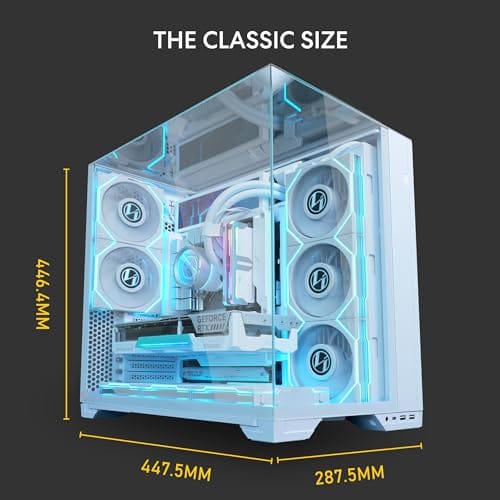
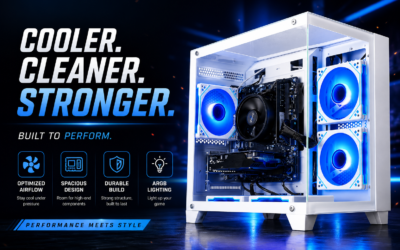
The Lian Li O11Vision Compact is a mid-range ATX mid-tower positioned as a smaller sibling to the O11 Dynamic line, developed in collaboration with the PCMasterRace community. It targets showcase builders who want a dual-chamber layout, tempered glass on three sides, and native support for back-connect motherboards in a tighter footprint.
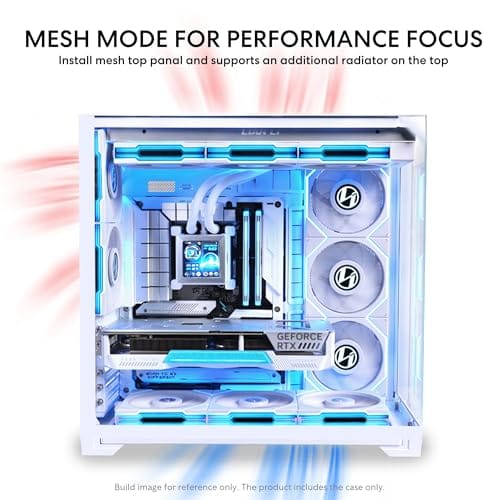
The defining feature is the patented three-panel tempered glass design covering the front, top, and left side. Paired with the second-chamber cable routing and back-connect motherboard compatibility, the front compartment stays visually clean. Builders wanting a 360mm AIO can swap in the included top mesh panel, trading a glass top for airflow.
Trade-offs are typical at this tier. Back-connect support only pays off if you buy a compatible board from ASUS, MSI, GIGABYTE, or similar, which narrows part selection and can raise motherboard cost. Concrete specs like GPU clearance, CPU cooler height, radiator sites, and included fan count are not specified in the source data, so verify against the official manual before finalizing parts.
Buy this if you want O11-family aesthetics with hidden cabling via a back-connect board and a side or top 360mm AIO. Skip this if you need a documented GPU length ceiling, bundled fans, or a traditional cable-visible motherboard build.
Motherboard support: The chassis accepts standard ATX boards and ads native routing for back-connect variants such as ASUS BTF, MSI Project Zero, and GIGABYTE Project Stealth. Cable cutouts on the tray align with rear-side connectors, keping the 24-pin, EPS, and PCIe cables out of the main chamber view.
Radiator and AIO: A swappable top mesh panel is included specifically to enable a 360mm AIO in the rof. When the AIO is mounted on the side instead, the dual-chamber layout routes the tubing into the second compartment, keeping the front-facing glass view unobstructed. Exact side radiator thickness limits are not specified.
Glass and panel layout: Three tempered glass panels cover the front, top, and left side. The top glass panel is the one you swap out when a 360mm radiator is installed, so builders choosing air cooling or a bottom-mounted AIO retain the full three-panel glass look.
Not specified in source: GPU length clearance, CPU cooler height, drive bay count, included fan count, front I/O (USB-C, USB-A), PSU length, and case dimensions are not listed in the provided data. Confirm these against the Lian Li O11VPW official spec sheet before finalizing parts.
Pros
- IP67 seal with air-lock valve keeps kit dry during rain, dust, or airline handling
- Pick-and-pluck foam in four layers adapts to cameras, lenses, tools, or medical gear
- Dual padlock holes on the latches allow TSA locks for checked-luggage transport
Cons
- No verified owner fedback at time of writing, so long-term wheel and latch durability is unproven
- Case with foam weighs 32.73 lb empty, which pushes loaded weight near airline checked limits
- Standard-density pluck foam is less protective than custom cut foam for heavy optics or precision instruments
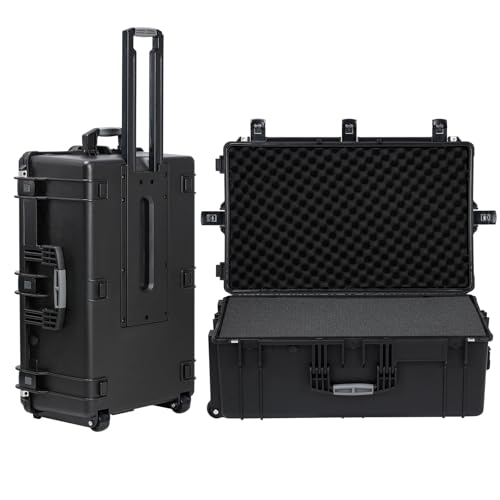
The Regetek Rolling Hard Case is a mid-size wheeled transport case in the Pelican-style category, measuring 32.5 by 20.5 by 13 inch externally with a 28.94 by 17.72 by 9.65 inch usable interior. It targets photographers, drone operators, field service techs, and musicians who need airline-checkable protection for fragile gear.
The defining feature is the IP67 rating paired with a full-length steel hinge and double-latch closure. Cases at this size and seal class typically survive shallow submersion to about 3.3 ft, and the air-lock valve equalizes pressure after altitude changes so the lid does not vacuum shut. Owner feedback is unavailable, so real-world seal longevity cannot be confirmed.
Trade-offs are typical at this tier. The 32.73 lb empty weight with foam eats into airline allowances before gear is loaded, and standard-density pick-and-pluck foam is a compromise between adaptability and impact absorption compared with custom cut foam. Wheels and retractable handles on cases in this class are also the most common long-term failure points.
Buy this if you need a lockable, waterproof rolling case sized for a full mirrorless kit, mid-size drone, or field tolset. Skip this if your payload exceeds the28.94 inch interior length, or if you need documented drop-test certification for professional broadcast use.
Dimensions and weight: Exterior measures 32.5 by 20.5 by 13 inch with an internal usable volume of 28.94 by 17.72 by 9.65 inch. Total weight with foam is 32.73 lb, which is consistent with rotomolded polymer cases in this size class and leaves useful payload room for airline checked baggage.
Sealing and ingress protection: The case is rated IP67 with an O-ring gasket, watertight buckles, and an air-lock pressure equalization valve. Manufacturer states safe submersion to 3.3 ft, and the valve prevents lid suction after temperature or altitude changes during air transit.
Foam configuration: Interior includes four pick-and-pluck layers of standard density foam, one top egg-crate layer, and one bottom pad. The pluck grid lets you shape custom cavities without a knife, though density is not specified in pounds per cubic foot.
Structure and security: Shell uses high-impact polymer with one full-length steel hinge instead of two-point hinges, a double-latch system, dual padlock holes for redundant locking, a heavy-duty top handle, integrated whels, and a retractable pull handle. Waranty is stated at 2 years including replacement parts.
Who this guide is for
This is for the builder who wants a clean, compact machine and doesn’t want a giant tower dominating the desk. Maybe you’re doing a living-room gaming rig, a tidy productivity box, or a small-form-factor build you can actually pick up and move. Compact cases reward planning, so if you enjoy measuring clearances and thinking through component fit before you buy, you’ll feel right at home here.
It’s also for the person who takes their PC places. LAN events, dorm moves, client sites, or just hauling a rig to a friend’s house for the weekend. A compact build is only genuinely portable if it survives the trip, which is why a protective transport case belongs in this conversation alongside the chassis itself. If you never move your machine and you want the absolute maximum radiator and drive capacity, a full tower will serve you better, and this isn’t the guide for that.
What to look for in an itx case
Clearances come first, always. In a small chassis the three numbers that make or break a build are GPU length, CPU cooler height, and radiator support. A modern graphics card can be well over 300mm long, and a tall air cooler can foul the side panel by a few millimeters and stop the case from closing. Check the manufacturer’s listed maximums against your exact parts before anything else. The Lian Li O11 Vision Compact, for instance, is a compact steel and tempered-glass design that leans on a dual-chamber-friendly layout to make room for hardware that would never fit a truly tiny box.
After clearances, weigh airflow, material quality, and build access. Tempered glass looks great but doesn’t move air, so you want intake paths that feed the GPU and CPU directly. Steel construction, like the O11 Vision Compact uses, is heavier than aluminum but far cheaper and plenty rigid. Then there’s portability. If you’ll carry the finished PC, look past the chassis to how you’ll protect it. Foam-lined, wheeled hard cases like the Regetek exist precisely so a small build doesn’t rattle itself apart in transit. Front-panel connectivity, dust filtering, and cable-routing room round out the checklist.
How we evaluated
We researched these picks by weighing listed dimensions, materials, layout, and the buyer ratings each product carries, then judged them on value rather than raw spec sheets. Compact cases live or die on how well real components fit inside them, so owner reports and clearance specs mattered more to us than marketing photos. A gorgeous case that can’t hold your graphics card is worthless, and a plain one that swallows every part cleanly is a win.
We also looked at the full journey of a small build, not just the moment it sits on a desk. That’s why our shortlist pairs a compact chassis with a protective rolling case: one houses the components, the other protects the finished machine when it travels. Ratings referenced below come straight from each listing, and we’ve avoided quoting review counts since those figures weren’t available. Prices move constantly, so treat every dollar figure here as a snapshot from our research rather than a fixed promise.
Our top picks
Best Compact Chassis: Lian Li O11 Vision Compact
At $124.99 with a 4.4 rating, the Lian Li O11 Vision Compact is the pick for anyone who wants a small-footprint build that still shows off the hardware inside. It’s a steel and tempered-glass case in Lian Li’s well-regarded O11 family, and the Compact designation means it shrinks that popular layout into a tighter footprint. The wraparound glass gives you a clear view of the components, which is the whole point for a lot of small-build enthusiasts, and Lian Li’s fit and finish are a step above generic budget enclosures at this price.
The listing calls out back-connect support, which pairs with back-connect motherboards to hide cables behind the tray for a cleaner front-facing look. That’s a genuinely nice feature in a glass case, since there’s nowhere for messy wiring to hide. The tradeoffs are the usual compact ones. Steel and glass make it heavier than an aluminum boutique case, and the smaller volume means you’ll want to verify GPU length and cooler height against Lian Li’s published clearances before you commit. But at $124.99 with a solid 4.4 rating, it’s a strong-value entry into good-looking small builds, and it’s the chassis most readers here should start with.
Best Transport Protection: Regetek Rolling Hard Case
The Regetek Rolling Hard Case runs $279.99 and carries a 4.6 rating, and it solves the problem a compact PC creates: how do you move it safely? This is a foam-lined hard case measuring 32.5 by 20.5 by 13 inches on the outside, with a roomy interior of roughly 28.94 by 17.72 by 9.65 inches. That inside space is generous enough to cradle a small-form-factor build plus its cables and accessories, and the pluck-and-pick foam lets you carve out a custom cavity so nothing shifts in transit.
Regetek builds in wheels and a retractable handle, so you roll it like luggage instead of straining your back carrying a loaded PC by hand. The listing describes it as shockproof and waterproof, which is the kind of protection that matters when your machine rides in a car trunk or gets checked at an event. The obvious caveat is that this isn’t a PC case you build inside. It’s a protective shell for a finished small rig, and at $279.99 it costs more than many compact chassis. For someone who leaves their PC on a desk forever, it’s overkill. For the LAN regular or the mobile creator, that 4.6 rating and rugged build make it a worthwhile companion to a compact machine.
How the price tiers stack up
Small-form-factor pricing doesn’t follow the same logic as full towers, so it helps to think in tiers. In the entry range, roughly $60 to $100, you get functional compact steel cases with basic airflow and enough clearance for mid-range parts. They get the job done, but cable management and material quality are basic. This is where a first small build usually starts.
The middle tier, where the $124.99 Lian Li O11 Vision Compact sits, is the value bracket most people should target. Here you’re paying for real fit and finish, tempered glass, thoughtful features like back-connect cable routing, and a brand with a track record for clearance accuracy. That accuracy is worth more than it sounds, because in a compact case a manufacturer that overstates GPU clearance by even 10mm can leave you with a half-built machine and no way to close the panel. Above that, boutique aluminum sandwich-style ITX cases climb past $200 for the tightest possible volumes and premium materials, and they demand the most careful part planning of all. And running parallel to all of it is the portability tier, where a protective case like the $279.99 Regetek adds transport-grade armor. Figure out which of those problems you’re actually solving before you spend, because a dollar spent on premium aluminum does nothing for a machine that never leaves the desk, and a dollar spent on a rolling case does nothing for raw performance.
Buying mistakes to avoid
The number one small-build mistake is ignoring clearances. Buyers fall in love with a case’s looks, order it, then discover their GPU is 20mm too long or their cooler pokes into the glass. Measure first. The manufacturer publishes maximum GPU length and cooler height for a reason, and in a compact case those limits are tight. Don’t guess.
The second mistake is treating airflow as an afterthought. A sealed glass box looks stunning and cooks your components if there’s no clear intake path. Plan your fans and your part choices around moving air, not just around aesthetics. And the third mistake is forgetting about transport entirely. If you built a small PC specifically so you could move it, tossing it in a backpack with no protection is asking for a cracked panel or a dislodged cooler. A foam-lined case like the Regetek exists to prevent exactly that. Match your spending to how you’ll actually use the machine.
Bottom line
If you want one clear recommendation, the Lian Li O11 Vision Compact at $124.99 is the pick most readers should build around. It brings genuine Lian Li fit and finish, tempered glass, and back-connect cable routing to a compact footprint, all backed by a solid 4.4 rating. It’s the sweet middle ground between cheap generic boxes and pricey boutique enclosures, and it’ll show off a tidy small build beautifully.
Here’s the quick decision path. Want a good-looking compact PC that stays on your desk? The Lian Li O11 Vision Compact is your chassis. Planning to carry that finished build to LAN events, client sites, or across campus? Add the $279.99 Regetek Rolling Hard Case so it survives the trip. Chasing the absolute smallest volume with premium aluminum? You’ll spend more at the boutique tier. Whatever you choose, confirm your GPU length and cooler height first, plan for airflow, and you’ll end up with a small machine that punches well above its size.
Common questions
Is the Lian Li O11 Vision Compact a true Mini-ITX case?
The O11 Vision Compact is a compact enclosure from Lian Li’s O11 family, built from steel and tempered glass with back-connect support. It’s aimed at small-footprint builds rather than the absolute tiniest ITX-only sandwich cases. Before buying, check Lian Li’s published motherboard and clearance specs against your exact parts, since compact cases have tight GPU length and cooler height limits. At $124.99 with a 4.4 rating, it’s a strong value for a clean, glass-fronted small build.
Do I need a transport case for a small PC?
Only if you move it. For a machine that lives on your desk permanently, a transport case is unnecessary spending. But if you carry your rig to LAN events, move often, or travel with it, a foam-lined hard case like the $279.99 Regetek protects the components from shocks and bumps. Its wheels and retractable handle also save your back, since a loaded compact PC is heavier than it looks.
Why do compact cases cost as much as bigger ones?
Small enclosures often carry a premium because fitting full-size components into a tight volume takes clever engineering, and boutique models use pricier aluminum. Mid-range steel-and-glass options like the Lian Li O11 Vision Compact at $124.99 keep costs reasonable by using steel and a proven layout. You’re paying for clearance accuracy, material quality, and features like back-connect cable routing rather than sheer size.
How important is airflow in a compact build?
It’s critical, because a small volume traps heat faster than a roomy tower. With less internal space, hot air from the GPU and CPU has fewer places to go, so intake and exhaust paths need to be deliberate. Plan your fans and component choices around airflow from the start. A glass-heavy case looks great, but make sure it still gives you clear intake routes, or your temperatures will climb under load.
What should I measure before buying a compact case?
Three numbers matter most: maximum GPU length, maximum CPU cooler height, and radiator support if you’re going liquid. Compare each against your exact components using the manufacturer’s published specs. In a compact chassis these limits are tight, and being even a few millimeters over means the case won’t close. Also check the case’s external dimensions against your desk space and, if you’ll transport it, against the interior of any protective case you plan to use.






















Write Your Review
No reviews yet. Be the first to share your experience!