

A single mechanical key that stops registering is usually not a mystery failure. It’s usually debris under the cap, a bent hot-swap socket leaf, a switch that wore out, a firmware layer you forgot existed, or damage on one trace of the keyboard PCB. Annoying, yes. Fatal? Not always. If you’re weighing a fix against a replacement, our guides to the best mechanical gaming keyboards and budget mechanical keyboards can help you price the decision, but start with the checks below first.
First check the obvious
Before you pull a switch, confirm the problem is really one key. Open a keyboard input viewer in your browser, press the dead key 10 times, then press nearby keys in the same row and column. If the nearby keys also miss, you may be looking at a matrix or PCB issue instead of one switch. If only one key fails, remove the keycap and look for crumbs, hair, a snapped stabilizer wire, or a switch stem that doesn’t return cleanly.
Also check software. Some boards have layers, macro modes, game modes, and key-lock shortcuts that can disable a single key or remap it to nothing. Unplug the keyboard for 30 seconds, try a different USB port, and use another PC if you can. Quick, boring, effective. Don’t skip it, because a surprising number of dead-key scares are just a saved profile or a cable that isn’t fully seated.
One more 30-second check: try the keyboard in your PC’s BIOS or on a login screen, before any drivers or software load. If the key works there but fails inside Windows or macOS, the hardware is fine and the problem is software. If it fails everywhere, including BIOS, you’ve narrowed it to the switch, socket, or PCB. That single check saves a lot of guessing, because it splits the whole troubleshooting tree in two before you touch a screwdriver.
Cause #1: Dirt, drink residue, or a stuck keycap
The simplest cause is physical blockage. Mechanical switches need the stem to travel down and return smoothly, and a tiny chip crumb can wedge near the stem or stabilizer. Pull the keycap straight up with a keycap puller if you have one, then use short bursts of compressed air around the switch housing. Hold the board at a slight angle so debris can fall out instead of deeper into the plate. If the key is large, like Space, Enter, Shift, or Backspace, inspect the stabilizer wire too. A popped wire can make the key feel dead even when the switch still works.
Liquid residue is tougher. If the key feels sticky or returns slowly, unplug the board right away. For a small spill that dried days ago, you can remove the cap and gently clean around the switch stem with a barely damp cotton swab and high-percentage isopropyl alcohol. Don’t flood the switch. Don’t pour alcohol into the board. Let it dry for several hours before reconnecting. Sticky soda can migrate under the switch and into the PCB, and once that happens, cleaning from above may not be enough.
Cause #2: The switch is worn, damaged, or no longer seated
If the board is hot-swappable, a failed or loose switch is the best-case repair. Pull the keycap, then use a switch puller to lift the switch straight out while pressing both retention tabs. Check the two metal pins on the bottom. They should be straight, parallel, and not folded flat against the plastic body. A bent pin can miss the socket and make the key do nothing. Straighten it gently with tweezers, reinsert the switch, and press until it sits fully flush with the plate.
If another switch on the board uses the same size and doesn’t control a critical key, swap it into the dead position. If the problem follows the switch, the switch is bad. If the same keyboard position stays dead, the socket or PCB is the culprit. Many hot-swap boards make this a 3-minute fix. Soldered boards are different; replacing the switch means desoldering the old one and soldering in a new one, which isn’t hard if you’ve practiced, but it’s not where I’d start on your only keyboard.
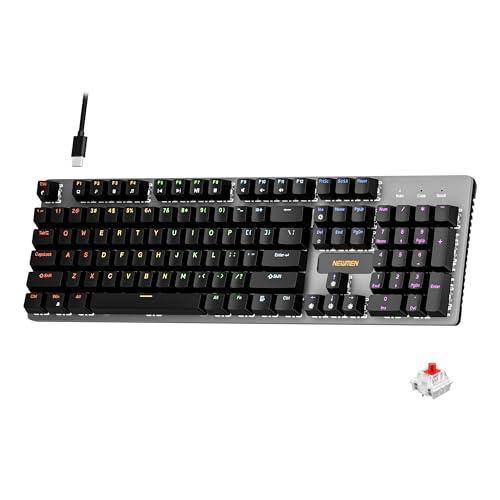
Pros
- Hot-swap sockets allow switch experimentation without soldering tools or PCB risk
- Metal top plate delivers firmer typing feel than plastic budget boards at this tier
- Full-key rollover and linear red switches handle rapid inputs for casual gaming
Cons
- Limited owner feedback at time of writing, so long-term reliability is unproven
- RGB is restricted to side lighting only, per-key backlight is fixed rainbow patterns
- ABS keycaps typical at this tier tend to shine and wear faster than PBT
The Newmen GM325Pro is a budget full-size 104-key wired mechanical keyboard aimed at first-time mechanical buyers and casual gamers who want a hot-swap PCB without moving up to enthusiast pricing. It ships with linear red switches, a metal top plate, ABS keycaps, and side-edge RGB lighting.
The defining feature here is the hot-swap socket combined with linear red switches. That gives new users a low-friction path to swap inactile or silent switches later without soldering. Typing fel on metal-plate boards at this tier is usually firmer and less hollow than all-plastic budget pers, based on category norms.
Trade-offs are typical for the price class. Per-key RGB is not suported, only side lighting is true RGB while the top backlight runs 13 preset rainbow effects. ABS keycaps tend to develop shine within months of heavy use, and Newmen does not publish switch lifecycle, polling rate, or NKRO wired specs in the source data.
Buy this if you want a cheap full-size hot-swap platform to learn on and plan to upgrade switches or keycaps later. Skip this if you need per-key RGB, PBT caps, a documented polling rate, or a keyboard with a dep owner review history to validate QC.
Switches and layout: Linear red switches on a full 104-key ANSI layout, with full-key rollover claimed by the manufacturer. Actuation force, travel, and switch brand are not specified in the source. Linear reds typically sit near 45g actuation and 4m total travel in this category.
Hot-swap PCB: Sockets accept standard MX-style switches, so tactile, clicky, or silent linear options from third parties drop in without soldering. Pin compatibility (3-pin vs 5-pin) is not specified, buyers should confirm before ordering replacement switches.
Build and lighting: Metal top plate over ABS black keycaps. RGB is limited to the side edge, while the top backlight cycles through 13 preset rainbow patterns rather than per-key addressable RGB. Case material below the plate is not specified.
Connectivity and software: Wired only via a detachable 1.8m USB cable. FN combos cover F1 to F11 media and calculator shortcuts. Customization software suports key remap, macro recording, and lighting tweaks, though poling rate and software platform support are not specified.
Cause #3: A hot-swap socket leaf is bent or cracked
Hot-swap sockets are convenient, but they’re also fragile. Each socket has tiny metal contacts that grab the two switch pins. If you install a switch with a bent pin, the pin can push the contact leaf out of place instead of sliding between the contacts. The switch will look installed, the keycap will feel normal, and the key still won’t register. Tiny part. Big headache.
Remove the switch and shine a phone flashlight into the socket. You should see two small metal contact points inside the plastic housing. If one looks flattened, offset, or missing, that’s your likely failure. Sometimes you can nudge a bent contact back into place with a fine needle or tweezers, but be gentle. If the socket has cracked off the PCB pad, the permanent repair is solder work: reflowing the joint, replacing the socket, or bridging a damaged pad with a small wire. If you’re not comfortable with that, the board may be cheaper to replace than repair.
Cause #4: Firmware, layers, macros, or OS settings changed the key
A mechanical key can be physically fine and still act dead because the keyboard is sending the wrong thing. This happens often on compact boards with function layers, QMK or VIA profiles, and gaming boards with onboard memory. A layer can set a key to Transparent, No Operation, or a macro that doesn’t produce visible text in a normal input box. If only one app ignores the key, check the app’s shortcuts before blaming the hardware.
Reset the keyboard profile through the manufacturer’s software if available, then save the default layout to onboard memory. On QMK or VIA boards, open the keymap and confirm the dead position is mapped to the expected key on the base layer and any layer you regularly use. Windows users should also check PowerToys Keyboard Manager, language layouts, and accessibility settings. Mac users should check modifier remaps and input sources. It sounds dull, but it’s a real cause, especially after firmware updates.
Cause #5: PCB trace, diode, or controller damage
If multiple keys in the same row or column stop working, suspect the keyboard matrix. Mechanical keyboards scan rows and columns through traces, diodes, and a controller. One damaged trace can knock out several keys, while a failed diode may cause one key to fail or ghost in strange ways. Spill damage often shows up here because liquid can corrode copper under a switch or around the diode, sometimes days after the board seemed to recover.
The clue is pattern. A lone dead A key might be a switch. A dead A, S, D, and F line points at a row or column. If the board has visible corrosion, green or white residue, or lifted pads under the switch, stop forcing it. More pressure won’t help. You can inspect with a magnifier, clean corrosion lightly with isopropyl alcohol, and check continuity with a multimeter if you know the matrix path. Otherwise, this is the point where DIY turns into electronics repair.
There’s also the controller and cable to rule out. A detachable USB-C cable can fail internally while looking perfect, so swap in a known-good cable before you blame the board. On boards with a daughterboard for the USB port, a cracked ribbon connection can cause flaky behavior that mimics a dead key. If the whole board drops out and comes back, or several unrelated keys act up at once, the fault is more likely the controller or the connection than any single switch. Rule out the cheap, easy parts before you reach for a soldering iron.
Preventive maintenance
Most dead-key problems are easier to prevent than fix. Keep drinks away from the board, or at least use a lidded cup. Pull keycaps every few months and blow out dust before it compacts under the switches. If your board is hot-swappable, inspect switch pins before pushing them in. Bent pins are one of the fastest ways to damage a socket. For boards used at work, especially if you’re checking options like our mechanical keyboards for programmers, quiet linear or tactile switches with normal-height caps are easier to clean and less fiddly than novelty layouts.
When it’s not fixable, what to replace
Replace the switch if the problem follows the switch to another location. Replace the keycap if the stem is cracked, loose, or rubbing on the switch housing. Replace stabilizers if a large key wobbles, binds, or no longer returns cleanly. Replace the whole board if the PCB has corrosion, a torn hot-swap socket pad, several dead keys in one row, or a controller fault. That’s not defeat. That’s math.
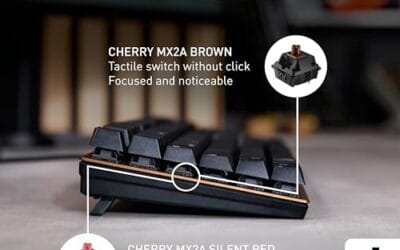
A replacement keyboard can make sense when repair parts plus time exceed the board’s value. The Cherry KC 200 MX uses New MX2A Silent Red switches, a metal plate frame, and a modern office layout at $56.31 with a 4-star rating, which makes it a reasonable reference point for the cost of moving on from a damaged board. If you’re shopping deals instead of repairing, our mechanical keyboard deals page is the better place to compare current options.

Pros
- MX2A Silent Red linears actuate quietly, good fit for open-plan offices
- Metal plate frame keeps chassis stiff and reduces caseping under typing
- Cherry Gold-Crosspoint contacts rated for 50 million keystrokes on this variant
- Full-size layout with dedicated numpad suits data entry and spreadshet work
Cons
- Renewed unit with no owner fedback loged yet, cosmetic and wear condition varies
- Silent Red linears lack tactile bump, typists who prefer fedback should pick Brown
- Source data omits connectivity, cable type, polling rate, and dimensions
The Cherry KC 200 MX is a full-size office-focused mechanical keyboard sold here as a Renewed unit in Bronze with MX2A Silent Red linear switches. It targets office typists, developers, and finance or admin users who want Cherry switch fel and a metal plate frame without the RGB and gamer styling of enthusiast boards.
The defining feature is the MX2A Silent Red switch, Cherry's updated linear with dampened stems aimed at reducing bottom-out and return noise. Cherry rates this variant for 50 million keystrokes. Based on the linear profile, expect smooth actuation with no tactile bump, which suits fast touch typists and users on frequent video calls.
Trade-offs are typical at this tier and Renewed status. Silent Red linears are polarizing, users coming from Browns or Blues will miss the tactile feedback, and the source does not specify polling rate, connection type, cable, keycap material, or dimensions. As a Renewed listing, cosmetic condition and remaining switch life depend on the refurbisher rather than a factory-fresh baseline.
Buy this if you want a quiet full-size Cherry mechanical for office or shared-space use and value the metal plate build over RGB features. Skip this if you prefer tactile or clicky switches, need confirmed wireless or USB-C connectivity, or want a waranty profile equivalent to new stock.
Switches: Cherry MX2A Silent Red, linear with integrated dampeners, made in Germany with Gold-Crosspoint contacts. Rated for 50 million keystrokes on this variant, versus 100 million on MX2A Brown. Linear travel with no tactile bump favors light, fast keypresses over deliberate typing fedback.
Build: Metal plate frame under the switches, which stiffens the deck and cuts flex compared with plastic-only office boards. Cherry positions the KC 200 MX as a slim modern design, though exact case height, weight, and keycap material are not specified in the source data.
Layout and indicators: Full-size layout retains the dedicated numpad and function row, which maters for spreadsheet,ERP, and accounting workflows. White LED status indicators are built into Caps Lock, Scroll Lock, and Num Lock keys, avoiding a separate indicator strip and keeping the top edge clean.
Gaming fit: Silent Red linears work for casual gaming and MMO or productivity crossover use given their light linear fel, but the source does not list polling rate, N-key rollover, or onboard profiles, so competitive esports buyers should confirm specs before committing.
Tools and parts needed
For basic repair, you’ll want a keycap puller, a switch puller, compressed air, high-percentage isopropyl alcohol, cotton swabs, tweezers, and a bright flashlight. For deeper work, add a multimeter, soldering iron, solder wick, and spare switches that match your board’s pin layout. Five-pin switches fit many hot-swap PCBs, while some boards need three-pin switches or clipped plastic legs. If your keyboard uses optical, low-profile, or proprietary switches, don’t assume standard MX-style parts fit. Check first. Saves money.
Keep the removed parts organized while you work. Put keycaps in rows on the desk, take one phone photo before removing stabilizer keys, and don’t mix switch positions until you know whether the failure follows the switch or stays with the socket. That little bit of order matters more than fancy tools. It keeps a simple fix from turning into a new layout puzzle.
A few more questions
Can one bad switch damage the keyboard?
Usually no. A normal worn switch just stops registering or starts chattering. The danger comes from bent pins on hot-swap boards, because forcing the switch in can bend socket contacts or lift a pad from the PCB.
Why does the key work sometimes but not always?
Intermittent behavior points to dirt, oxidation, a loose switch, or worn metal contacts inside the switch. It can also happen with a cracked solder joint on a soldered board. If tapping the board changes the behavior, suspect a connection issue rather than software.
Is key chatter the same as a dead key?
No. A dead key doesn’t register, while chatter registers twice or more from one press. Both can come from switch wear or contamination, but chatter is often fixable with switch cleaning, debounce settings, or replacing the switch.



























Write Your Review
No reviews yet. Be the first to share your experience!