

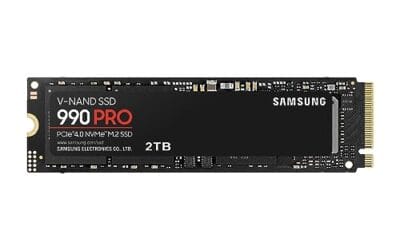
NVMe is the storage protocol that lets modern SSDs talk to your CPU over PCI Express instead of acting like an old SATA drive. That’s why a small M.2 stick can load Windows, games, project files, and large apps far faster than the 2.5-inch SSDs many older PCs used. If you’re shopping by capacity, our 2TB NVMe SSD guide and gaming NVMe picks cover current drive choices. This explainer is the plain-English part: what NVMe does, why it feels fast, and where the limits show up.
The short answer
NVMe stands for Non-Volatile Memory Express. It’s a command protocol designed for flash storage, not spinning hard drives, and it usually runs over PCIe lanes on an M.2 drive in a desktop, laptop, console, or compact workstation. The important bit is simple: NVMe lets an SSD handle lots of parallel storage requests with very low delay. That’s what makes a PC feel snappy when opening apps, copying big files, or loading a huge game world.
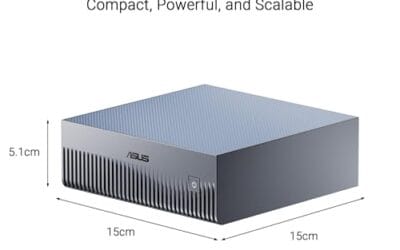
You don’t need to memorize the acronym to buy well. Look for capacity, PCIe generation, endurance, controller quality, warranty, and whether your motherboard slot supports the drive’s size and speed. The ASUS Ascent GX10, priced at $3,970.99 with a 4.2 rating, shows NVMe in a complete high-end system context: its title lists a 1TB PCIe Gen4 NVMe SSD alongside an NVIDIA GB10 Superchip, 128GB LPDDR5x, Wi-Fi 7, and Bluetooth 5.4. In that kind of machine, storage is part of the performance stack, not an afterthought.

Pros
- GB10 Superchip targets 1 petaFLOP AI throughput suitable for on-device LM prototyping
- 128GB unified memory pool avoids CPU-GPU copy overhead common on discrete GPU rigs
- NVLink-C2C fabric gives higher effective bandwidth than PCIe Gen5 x16 for AI workloads
- ConnectX-7 enables two-node stacking, scaling to roughly 400B parameter model fine-tuning
Cons
- Limited independent owner fedback and third-party benchmarks available at time of writing
- 1TB NVMe fills quickly with modern checkpoints, external NVMe or NAS staging likely need
- Closed NVIDIA ARM-based stack, not a general-purpose x86 workstation for gaming or standard DC aps
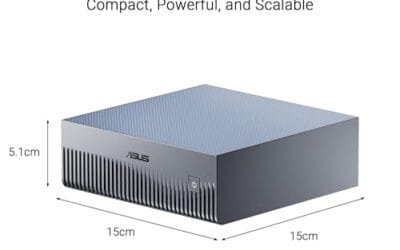
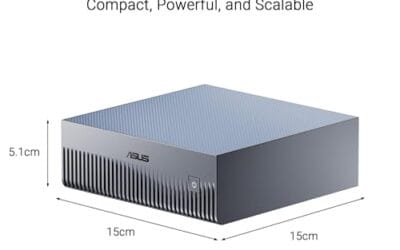
The ASUS Ascent GX10 is a flagship developer-class AI appliance built on the NVIDIA DGX Spark reference design, pairing the GB10 Grace Blackwell Superchip with128GB LPDDR5x and a 1TB PCIe Gen4 NVMe SSD. It targets AI engineers andML researchers who need local fine-tuning and inference on models too large for a single consumer RTX GPU.
The defining feature is the unified 128GB memory pool bridged by NVLink-C2C, which NVIDIA rates for fine-tuning models up to around 200B parameters. Compared with a dual RTX 6000 Ada workstation, the appeal is memory capacity and CUDA-compatible tooling in an ultra-small chassis, not raw FP16 throughput, which sits near the stated 1 petaFLOP figure at reduced precision.
Trade-offs are typical of this tier and platform. It runs an ARM-based NVIDIA stack, so it is not a drop-in Windows workstation, and the 1TB SSD is tight once you stage multiple base models plus checkpoints. Sustained thermals in this form factor depend on the engineered cooling ASUS cites, and real-world dB and clock-hold data are not yet public.
Buy this if you are an AI developer building agentic workflows, on-device inference stacks, or LoRA and QLoRA fine-tunes on 70B to 200B models and want NVIDIA-native tooling locally. Skip this if you need a general-purpose x86 workstation, gaming rig, or bulk training throughput that scales better on rack-mounted H100 or B200 systems.
Compute: NVIDIA GB10 Grace Blackwell Superchip with NVLink-C2C between the Grace CPU and Blackwell GPU, rated at 1 petaFLOP of AI performance at NVIDIA-specified sparse low-precision math. Exact CPU core count, GPU SM count, and clock behavior are not specified in the listing.
Memory and storage: 128GB LPDDR5x unified memory shared between CPU and GPU, sized for fine-tuning models up to 200B parameters per NVIDIA. Storage is a single 1TB PCIe Gen4 NVMe SSD. Additional M.2 slots, DRAM channel count, and TBW endurance are not specified.
Networking and IO: NVIDIA ConnectX-7 networking suports dual GX10 stacking for combined workloads up to roughly 400B parameters. Wireless is WiFi 7 and Bluetooth 5.4. Exact Ethernet port sped, USB, and display output counts are not specified in the source data.
Chassis and software: Stackable ultra-small form factor with engineered cooling for sustained AI loads. Ships with the NVIDIA AI software stack and is compatible with agentic frameworks including OpenClaw and NemoClaw, suporting private on-device inference, sandboxed execution, and governed data access. PSU wattage, dimensions, and weight are not specified.
The longer explanation
Older consumer SSDs often used SATA because SATA was already common on motherboards and laptops. SATA worked fine for hard drives, but it was built around the limits of mechanical storage. A hard drive has moving parts, so the interface didn’t need to handle a wild number of simultaneous commands. Flash storage changed that. SSDs can read and write across many memory cells at once, so the old command path became a bottleneck. NVMe was built to remove much of that friction.
Most people meet NVMe through an M.2 drive, but M.2 is the physical shape, not the protocol. A gumstick-sized M.2 module can be SATA or NVMe, though modern performance drives are usually NVMe. PCIe is the highway, NVMe is the language, and NAND flash is the storage medium. That’s the clean mental model. If your motherboard has an M.2 slot wired for PCIe Gen4 x4, a compatible NVMe drive can use four PCIe Gen4 lanes. If the slot is older or wired with fewer lanes, the same drive may run at a lower ceiling.
History / how we got here
PC storage used to be ruled by hard drives, then SATA SSDs made everyday computers feel dramatically quicker. Boot times dropped, apps opened faster, and random access improved because there was no platter to spin or head to move. But SATA SSDs soon ran into the interface ceiling. Even a good SATA SSD was limited by a protocol and connection designed for a different era.
NVMe arrived as flash storage became normal in servers and high-end PCs. The design supports deep queues and many commands, which is exactly what solid-state storage can use. Over time, M.2 NVMe slots moved from premium motherboards to mainstream boards, then laptops, small desktops, and consoles. Now, even a midrange gaming PC often has at least one NVMe boot drive. Quick. Quiet. Tiny.
Why it works this way
NVMe feels fast because it cuts storage delay in two ways. First, it runs over PCIe, which offers much more bandwidth than SATA. Second, it uses a command structure built for parallelism. That matters because modern operating systems don’t ask storage for one neat file at a time. They’re constantly pulling small chunks, indexing data, updating caches, loading textures, writing logs, and juggling background tasks. NVMe handles that traffic more gracefully.
The catch is that not every workload scales the same way. Moving a 100GB video folder from one fast NVMe drive to another can show a huge difference over SATA, especially while the drive cache holds up. Launching a tiny utility may not feel twice as fast because CPU scheduling, software startup routines, antivirus scans, and RAM all play a role. You’ll notice NVMe most when the storage device is actually the slow part. You won’t notice it much when the bottleneck lives somewhere else.
When you’d want this
You’d want NVMe for a boot drive in almost any new PC. Windows 11, browser caches, game launchers, updates, and creative apps all benefit from low-latency storage. It’s also a strong fit for gaming because large installs, shader caches, and open-world streaming can punish slow drives. If you’re building around a 2TB drive, our NVMe boot drive picks focus on that exact role.
NVMe also makes sense in complete systems where the rest of the hardware can feed it. The MSI Codex Z2 Gaming Desktop, listed at $2,067.34 with a 4.1 rating, includes an AMD R7-8700F, GeForce RTX 5070, 32GB DDR5, and a 2TB M.2 NVMe SSD. That combination is the modern gaming-PC pattern: enough CPU, enough memory, a strong GPU, and fast storage so the machine doesn’t feel lopsided. It’s not magic, but it’s the right baseline for a premium desktop.

Pros
- RTX 5070 Blackwell GPU is well above average for this prebuilt price tier
- 32GB DDR5 at 6000 MHz avoids the need for a near-term RAM upgrade
- 2TB NVMe SSD is a practical capacity for a modern game library
- WiFi 6 and Bluetooth built in with no added cost
Cons
- No verified owner reviews at time of writing, making real-world reliability hard to assess
- Ryzen 7 8700F uses Socket AM4, limiting CPU upgrade path compared to AM5 platform alternatives
- RTX 5070 ships with 12GB GDDR6, which may become a ceiling in demanding 4K scenarios by 2027
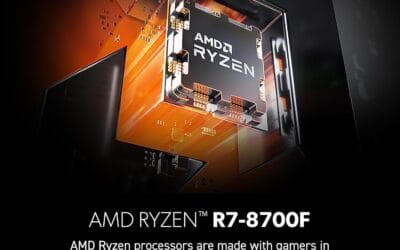
The MSI Codex Z2 is a mid-to-high-end gaming tower aimed at buyers who want RTX 5070-class performance without building from scratch. Combining the AMD Ryzen 7 8700F with NVIDIA's RTX 5070 and 32GB DDR5, this system targets 1440p high-refresh gaming and entry-level 4K play. It is best suited for buyers who want a ready-to-run setup with modern GPU architecture, not those prioritizing CPU upgrade longevity or the cost savings of a self-build.
The RTX 5070 is the headline component here. Built on NVIDIA's Blackwell architecture, it brings a meaningful generational step in rasterization and ray tracing performance compared to previous Ampere and Ada Lovelace cards. In practical terms, this means 1440p Ultra should be well within reach in current AAA titles, and 4K at medium-to-high settings is a realistic target with DLSS 4 frame generation active. Paired with the 8-core Ryzen 7 8700F boosting to 5.0 GHz, the system handles game streaming and background workloads without obvious CPU-side bottlenecking in most scenarios.
MSI has put some effort into the thermal design. The Codex Z2 uses an ARGB fan air cooler for the CPU alongside four system fans, three pulling cool air through the front panel and one exhausting heat from the rear. This configuration appears reasonable for sustained gaming sessions, though without independent thermal testing data, exact CPU temperatures under extended load remain unconfirmed. The compact tower footprint at 16 x 8.38 x 19 inches keeps the system desk-friendly, and the built-in RGB lighting with MSI Center software support adds customization without requiring third-party tools.
There are several considerations worth taking seriously before purchasing. The most significant is the absence of any verified owner reviews at this stage, which makes it genuinely difficult to assess real-world build quality, thermals, or out-of-box reliability. Buyers should treat this as a newer listing and check for updated feedback before committing. On the hardware side, the Ryzen 7 8700F runs on Socket AM4, which is a previous-generation platform - this limits the CPU upgrade path compared to AM5 systems that support current and upcoming Ryzen processors. Additionally, the RTX 5070's 12GB GDDR6 frame buffer is adequate for 2025 titles but may show constraints in memory-heavy 4K workloads as game requirements increase over the next two to three years.
Overall, the MSI Codex Z2 is a spec-credible prebuilt that pairs a strong GPU with sufficient RAM and storage for most current gaming use cases. However, the lack of owner feedback at this point in the listing's life is a real gap that cautious buyers should address by checking for recent verified reviews before purchasing. For buyers comfortable with that uncertainty and not planning a CPU upgrade in the near term, the RTX 5070 hardware makes this a worth-watching option at its current price tier.
What to look for in a NVMe drive
Start with capacity. A 1TB NVMe drive is comfortable for a boot drive with several apps and a few large games, while 2TB is the safer target for a gaming PC that won’t need cleanup every month. Content creators may want 4TB or a separate scratch drive if they work with 4K footage, large RAW libraries, or local AI datasets. Don’t buy only by peak read speed. A drive that advertises huge sequential numbers can still slow down under sustained writes if its cache fills. Also check whether the drive has DRAM, uses host memory buffer, or relies heavily on SLC caching, because those design choices affect long copies more than a flashy box number.
Next, match the drive to the slot. PCIe Gen5 drives can be very fast, but they may cost more, run hotter, and provide little everyday gain on a system mostly used for gaming and browsing. PCIe Gen4 remains a strong value for many builds. Check whether your board includes a heatsink, how many M.2 slots share lanes with SATA ports or PCIe slots, and whether the drive length is supported. Most consumer drives are 2280 size, meaning 22mm wide and 80mm long, but small PCs and handhelds can use shorter modules.
Common misconceptions
The first misconception is that NVMe and M.2 mean the same thing. They don’t. M.2 describes the connector and card shape, while NVMe describes the storage protocol. Another misconception is that the fastest published read speed always makes the best drive. For real PCs, capacity, sustained write behavior, thermals, warranty, and price often matter more than chasing the largest number on the box.
There’s also a comfort trap around upgrades. If your PC still uses a hard drive as the boot device, moving to almost any SSD will feel massive. If you already use a decent SATA SSD, an NVMe upgrade will still help, but the change may feel more situational. For games and creative work, it can be very worthwhile. For email, documents, and light browsing, it’s nice rather than life-changing. Honest answer.
Frequently asked
Is NVMe better than SATA?
Yes for performance, especially in bandwidth and latency. NVMe uses PCIe and a flash-friendly command design, while SATA is an older storage interface. SATA SSDs are still usable for secondary storage, but NVMe is the better default for a new boot drive.
Do all M.2 drives use NVMe?
No. Some M.2 drives use SATA, especially older or budget models. Before buying, confirm the drive says NVMe and check that your motherboard’s M.2 slot supports PCIe storage. Keying and slot wiring both matter.
Will NVMe improve gaming performance?
It can improve load times, patching, asset streaming, and general responsiveness. It usually won’t raise frame rates by itself because FPS depends more on the GPU, CPU, memory, and game engine. For modern large games, though, NVMe is a sensible baseline.
Does PCIe Gen5 matter for most people?
Not usually. PCIe Gen5 NVMe drives can be extremely fast in specific large-file workflows, but many gaming and everyday tasks don’t use the full speed. A good PCIe Gen4 drive often gives better value, lower heat, and excellent real-world responsiveness.
Can I add NVMe to an older PC?
Often, yes, but it depends on the motherboard. If the board has an M.2 PCIe slot, installation is usually straightforward. If it doesn’t, a PCIe adapter card may work for storage, though boot support can vary by BIOS. Check the manual before ordering.
The everyday feel comes from latency as much as peak bandwidth. NVMe drives respond quickly to many small requests at once, which is why Windows search, game launchers, and large project folders feel less sticky compared with an older SATA drive. You may not watch a progress bar move six times faster every day, but the PC spends less time pausing between small storage chores.




























Write Your Review
No reviews yet. Be the first to share your experience!