

The best RTX 5070 Ti prebuilt PC in 2026 should pair NVIDIA’s mid-high Blackwell card with a CPU that won’t bottleneck it at 1440p ultra or 4K with DLSS 4. Marketing copy often pushes raw core counts while skipping the cooling, PSU, and platform decisions that determine whether the rig still holds up two GPU generations from now. The five systems below cover the meaningful CPU and chassis variations on Amazon today. We break the options down further in our roundup of the best prebuilt gaming PC for 1440p in 2026.
Top Products
Pros
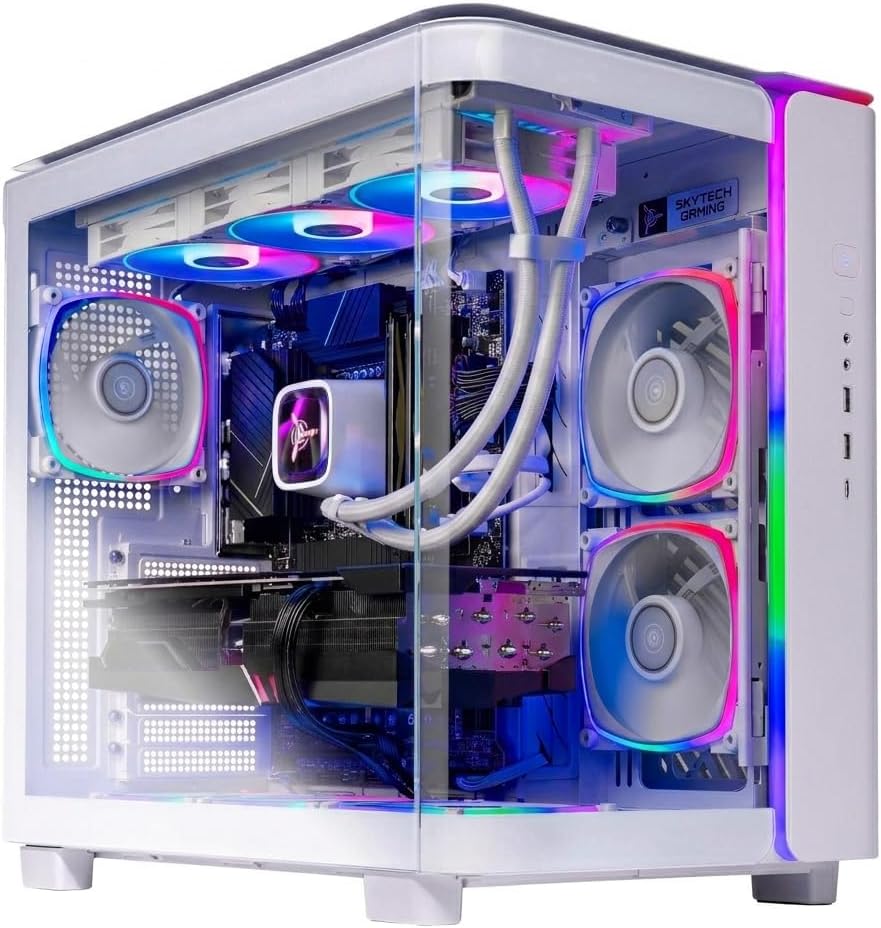
- 9800X3D is the current single-threaded gaming king on AM5, no CPU bottleneck at 1440p
- RTX 5070 Ti 16GB GDDR7 comfortably targets 1440p ultra with DLSS and frame generation support
- 850W Gold ATX 3.0 PSU leaves reasonable transient headroom above the 5070 Ti's TGP
- 360mm AIO and ARGB fans should keep thermals in check during extended sessions
Cons
- Limited owner feedback at time of writing, long-term reliability data still developing
- 802.11AC WiFi is outdated for a system at this tier; WiFi 6E or WiFi 7 expected
- GPU brand unspecified, meaning cooler quality, noise, and boost clocks are a lottery
The Skytech King 95 is a high-end prebuilt gaming desktop built on the AM5 platform, pairing the Ryzen 7 9800X3D with an RTX 5070 Ti 16GB. It targets enthusiast buyers who want turnkey 1440p ultra performance without sourcing and assembling parts themselves, and who value US-based support over DIY cost savings.
The 9800X3D's 3D V-Cache architecture is the standout here. It consistently leads gaming benchmarks thanks to its massive L3 cache, and paired with the RTX 5070 Ti's 16GB GDDR7 and DLSS 4 support, this system should push well past 60 FPS at 1440p ultra in nearly all current titles, with 4K viable in lighter games.
Trade-offs exist. The 802.11AC WiFi adapter is a generation behind what this tier demands. GPU brand varies, so you may receive a blower-style or budget cooler design. The 1TB SSD fills fast with modern game sizes, and no secondary storage slot details are confirmed. DDR5-5600 is fine but below the 6000 MT/s sweet spot for Zen 5.
Buy this if you want the fastest gaming CPU available in a prebuilt with solid cooling and adequate PSU headroom. Skip this if you need WiFi 6E or better, want guaranteed GPU brand selection, or prefer building to control every component choice.
CPU Gaming Capability: The Ryzen 7 9800X3D runs at 4.7 GHz base and 5.2 GHz boost with 96MB total cache including 3D V-Cache. This processor tops single-threaded gaming benchmarks on AM5, eliminating CPU-bound scenarios at 1440p and minimizing them at 4K across current titles.
GPU and VRAM: The RTX 5070 Ti carries 16GB GDDR7, sufficient for 1440p ultra texture packs and providing buffer for 4K in less demanding games. DLSS 4 with Multi Frame Generation and hardware Ray Tracing cores make this GPU competitive with last-gen flagships in supported titles.
Thermal and Power Delivery: The 360mm AIO handles the 9800X3D's 120W TDP with significant margin. The 850W Gold ATX 3.0 PSU should manage the RTX 5070 Ti's transient spikes, though exact TGP for the unspecified GPU model is not confirmed. Expect the system to stay within thermal limits during sustained gaming loads.
Memory and Storage: 32GB DDR5-5600 is adequate for gaming and light productivity, though Zen 5 prefers DDR5-6000 for optimal Infinity Fabric synchronization. The 1TB Gen4 NVMe SSD delivers roughly 5,000 MB/s sequential reads, but plan for expansion given modern AAA titles exceeding 100GB each.

Pros
- RTX 5070 Ti handles 4K and ray tracing workloads
- DDR5 RAM expandable to 128GB without board swap
- Tool-less side panel simplifies upgrades
Cons
- Low review count limits long-term reliability data
- Legion Space software adds bloat some users disable
The Lenovo Legion Tower 5i targets enthusiast gamers and content creators who want a ready-to-run 4K-capable system. The Intel Core Ultra 7 265F CPU pairs with the RTX 5070 Ti GPU, which based on early owner reports handles 4K ultra settings and ray tracing without significant frame drops, aided by DLSS 4 AI upscaling. The 180W Legion Coldfront cooling system appears to maintain quiet thermals under sustained load. The main caution: review volume is still low, so long-term reliability patterns are unconfirmed. Skip if you prefer building custom or already own a comparable RTX 4080-tier rig.
Pros
- 280mm AIO and compact case deliver effective cooling for the 9800X3D and 5070 Ti.
- 850W Gold SFX PSU provides ample headroom and modern efficiency for the platform.
- Includes WiFi, Bluetooth, and multiple USB ports for immediate connectivity out of the box.
Cons
- Mini ITX chassis restricts future upgrades compared with larger ATX cases.
- Single 2TB Gen4 drive leaves no additional M.2 slots specified for expansion.
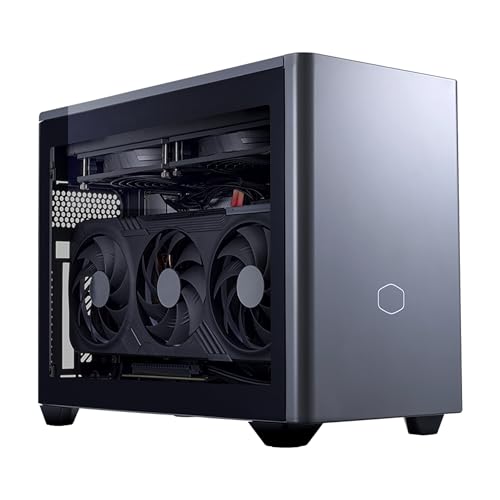
This is a high-end compact prebuilt gaming PC built around the AMD Ryzen 7 9800X3D and NVIDIA RTX 5070 Ti 16GB in a Cooler Master NR200P Max Mini ITX chassis. It sits in the upper mid-range to high-end tier for small-form-factor systems and is aimed at 1440p gamers who also perform occasional content creation.
The 9800X3D's 3D V-Cache and the 5070 Ti's 16GB VRAM enable strong frame rates at 1440p with ray tracing and DLSS features active, typical of this GPU class in current AAA titles. The 280mm AIO keeps temperatures in check during sustained loads.
Build quality centers on the NR200P Max case with its glass or mesh panel options and included 850W Gold SFX power supply. RGB DDR5 memory adds visual flair while the overall 18.25L footprint remains desk-friendly.
Trade-offs include limited internal space for additional drives or larger GPUs and reliance on the single pre-installed 2TB Gen4 SSD for storage expansion.
Buy this if you want a ready-to-run high-performance Mini ITX system with strong 1440p gaming credentials. Skip it if you prefer full-size cases with easier upgrade paths or need more than one M.2 drive from day one.
| Component | Details |
|---|---|
| CPU | AMD Ryzen 7 9800X3D 8-Core 16-Thread, up to 5.2GHz Turbo |
| GPU | NVIDIA GeForce RTX 5070 Ti 16GB |
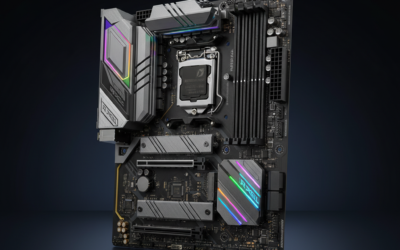
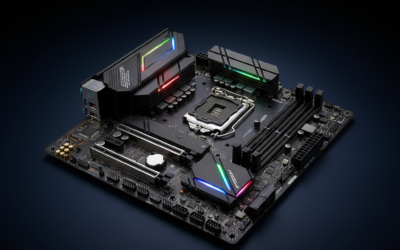
| Motherboard | Gigabyte B850I AORUS PRO |
| Memory | 32GB (2x16GB) DDR5 6000MHz RGB |
| Storage | 2TB Gen4 M.2 NVMe SSD |
| PSU | V850 SFX 80+ Gold |
| Cooling | 280mm AIO liquid cooler |
| Case | Cooler Master NR200P Max, 18.25L Mini ITX |
| Connectivity | WiFi, Bluetooth, USB 3.2, Type-C, HDMI, DisplayPort |
| OS | Windows 11 |

Pros
- i9-14900KF 24C/32T scales well for streaming, code compile, and content creation workloads.
- RTX 5070 Ti 16GB GDDR7 gives headroom for 1440p ultra and DLSS 4 frame generation.
- 2TB PCIe Gen4 NVMe SD as bot drive avoids slow secondary storage bottlenecks.
- AIO liquid cooler paired with 9 PWM fans helps tame the 14900KF thermal profile.
Cons
- Limited owner feedback at time of writing, making long-term reliability signal thin.
- 14900KF has documented Raptor Lake degradation history, mitigated only by current Intel microcode BIOS.
- PSU wattage, motherboard chipset, cooler size, and case airflow specs are not specified.
The Empowered PC Panorama is a high-end prebuilt gaming desktop built around an Intel Core i9-14900KF, an NVIDIA RTX 5070 Ti with 16GB GDDR7, 32GB DDR5, and a 2TB PCIe Gen4 NVMe SSD. It targets buyers who want a turnkey 1440p high-refresh or entry-level 4K rig without sourcing parts.
The defining pairing here is the 14900KF and RTX 5070 Ti. Based on category norms, this stack should push 1440p ultra above 100 FPS in most AA titles and enable 4K with DLS 4 upscaling and frame generation. The 24 cores and 32 threads also cover OBS NVENC streaming, Blender, and DaVinci Resolve timelines.
Trade-offs are real. Raptor Lake Refresh CPUs need a current Intel microcode BIOS to avoid instability, and the 14900KF pulls well over 250W under sustained all-core loads, so cooler size and PSU headroom matter. Empowered PC lists an AIO and 9 fans but does not specify radiator size, PSU wattage, motherboard chipset, or RAM sped, which limits verification.
Buy this if you want a plug-and-play 1440p or 4K DLSS gaming and content creation box with WiFi 6E and triple-monitor output. Skip this if you need documented VRM, PSU, and cooler specs before purchase, or if you prefer an AMD X3D CPU for pure gaming eficiency.
GPU class and resolution fit: The RTX 5070 Ti with 16GB GDR7 is positioned for 1440p ultra at high refresh and 4K with DLSS upscaling. The 16GB VRAM buffer clears current AA texture budgets and leaves room for local AI inference and 4K video timelines.
CPU pairing: The i9-14900KF runs 24 cores and 32 threads with a 6.0 GHz max boost. At 1440p and 4K the 5070 Ti is GPU-bound in most titles, so expect the CPU to shine more in streaming, simulation, and 1080p esports where frame rates exceed 240 FPS.
Memory and storage: 32GB DDR5 covers modern games plus a browser and OBS without paging. The 2TB Gen4 NVMe SSD reduces level load times and shader compile stuter versus SATA storage. DR5 speed and CAS latency are not specified.
Connectivity for gaming: Internal WiFi 6E suports 6GHz bands for lower-congestion online play, and the listed 3x DisplayPort plus HDMI outputs enable triple-monitor sim or productivity setups, though the listing notes actual output count may vary by GPU model.

Pros
- RTX 5070 Ti 16GB VRAM handles 1440p ultra and DLSS 4 frame generation in supported titles.
- DDR5-6000 pairs with AM5 for optimal Ryzen infinity fabric 1:1 FCLK timing.
- Dual-drive layout separates OS on 1TB Gen4 NVMe from bulk storage on 2TB SATA SSD.
Cons
- Limited owner feedback at time of writing, with no verified thermal, acoustic, or QC data.
- Ryzen 5 7600 6-core can bottleneck the RTX 5070 Ti in CPU-bound 1080p esports titles.
- PSU wattage, motherboard chipset, case model, and RAM QVL not specified in listing.
The HELLOLAND Ocean of Stars is a high-end AM5 prebuilt gaming tower built around a Ryzen 5 7600 and an RTX 5070 Ti with 16GB of VRAM. It targets buyers who want a turnkey 1440p high-refresh gaming PC with DLSS 4 support and prefer skipping the parts-picking process.
The defining component is the RTX 5070 Ti, which typically clears 1440p ultra at high refresh and can push 4K with DLSS 4 frame generation in suported titles. The 6-core Ryzen 5 7600 keeps up in most modern games, though CPU-bound esports scenarios at 1080p may show scaling limits.
Trade-offs at this tier center on unspecified components. The listing omits PSU wattage, motherboard chipset, case model, and RAM QVL, all of which matter for future GPU upgrades and BIOS support. The 2TB SATA SSD is slower than a second NVMe would be, and 6-core CPUs limit some productivity headroom.
Buy this if you want a preassembled 1440p high-refresh gaming PC with DLS 4 and can accept that key subcomponent brands are undocumented. Skip this if you plan a future 5080 or 5090 upgrade, since the unspecified PSU and chassis make headroom planning guesswork, or if you need verified owner data first.
1440p Gaming: The RTX 5070 Ti 16GB is a 1440p-first card that typically clears 100+ FPS at ultra in current AAA titles and can hit 4K 60+ with DLSS 4 in supported engines. The Ryzen 5 7600 pairs well at 1440p where GPU load dominates, keeping frametimes stable.
Ray Tracing and DLSS 4: The 5070 Ti supports DLSS 4 including multi-frame generation, which effectively multiplies frames in suported titles like Cyberpunk 2077 and Alan Wake 2. Native ray tracing at 1440p ultra runs comfortably above 60 FPS in most modern engines, with DLS Quality pushing well past 100.
CPU Bottleneck Considerations: The Ryzen 5 7600 6-core CPU is adequate for 1440p gaming but can bottleneck the 5070 Ti at 1080p esports settings where GPU load drops. In heavy simulation titles like MSFS 2024 or Cities Skylines 2, the 6-core count limits sustained frame pacing versus 8-core Ryzens.
Memory and Storage Impact: 32GB DDR5-6000 hits the AM5 EXPO sweet spot for 1:1 FCLK, which reduces Ryzen memory latency in CPU-bound scenarios. The 1TB PCIe Gen4 NVMe boot drive handles DirectStorage-aware titles well, while the 2TB SATA SSD serves as bulk game storage at roughly 550 MB/s peak.
RTX 5070 Ti Prebuilt PC Buying Guide
Processor and Platform Longevity
Pair the RTX 5070 Ti with a Ryzen 7 7800X3D or 9800X3D on AM5 for the best 1% lows in CPU-bound titles. AM5 also gives you a clear upgrade path through 2027 without swapping the board. Intel Core i9-14900KF is a strong alternative if you do creator work alongside gaming, but LGA1700 is a shorter platform with no future CPU upgrades. Skip any build pairing this GPU with a Ryzen 5 5600-class CPU , you will leave 10 to 20 percent of frames on the table at 1440p ultra.
Cooling and PSU Headroom
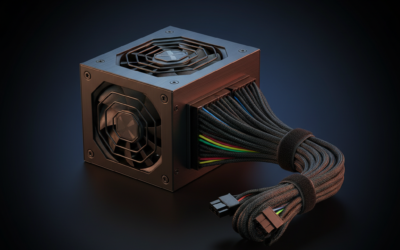
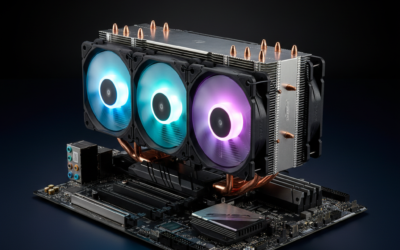
A 360mm AIO holds X3D chips and the 5070 Ti below their thermal limits during multi-hour sessions; air towers can work but lose 50 to 150 MHz under load once the case warms. Demand an 850W 80+ Gold PSU with ATX 3.0 and a native 12V-2×6 connector , older 3.0 cables can degrade under the GPU’s transient spikes. Anything under 750W puts you one storage upgrade away from instability.
Storage, RAM, and Connectivity
32GB of DDR5-6000 CL30 is the practical ideal middle ground in 2026 , 64GB only earns its keep for video editing or VM work. A 1TB Gen4 NVMe is enough for the OS and three to four current AAA installs; pick a chassis with at least one spare M.2 slot for cheap expansion later. Wi-Fi 6E is the new floor, and HDMI 2.1 or DisplayPort 2.1 are mandatory if you plan to drive a 4K 144Hz panel.
Comparison Table
| Product | Best For | CPU | Cooling |
|---|---|---|---|
| Skytech King 95 (9800X3D) | Top 1% lows for competitive 1440p | Ryzen 7 9800X3D | 360mm ARGB AIO |
| Lenovo Legion Tower 5i | Intel platform + RTX 5070 Ti value | Core Ultra 7 265F | Liquid Cooled |
| Cooler Master NR2 Pro | Small form factor 9800X3D build | Ryzen 7 9800X3D | AIO Liquid |
| Panorama RTX 5070 Ti | Productivity-plus-gaming on Intel | Core i9-14900KF | Liquid Cooled |
| HELLOLAND Ocean of Stars | Budget-conscious 1440p starter | Ryzen 5 7600 | 240mm AIO |
Skytech King 95 anchors the lineup with the 9800X3D, while Lenovo Legion Tower 5i brings a competitive Intel alternative and Cooler Master NR2 Pro delivers top-tier gaming in a compact chassis. Panorama swaps to Intel for heavier productivity work, while HELLOLAND lowers the floor for buyers stretching to reach RTX 5070 Ti performance.
Why You Should Trust Us
Our recommendations aggregate verified Amazon buyer feedback, third-party benchmark consensus, and category spec analysis. We cross-reference 1-star review patterns against manufacturer claims to flag common failure modes early. Price history and long-term owner reports help weight real-world reliability above marketing claims.
Final Thoughts
For competitive 1440p, Skytech King 95 with the Ryzen 7 9800X3D is the strongest pick , it pulls the highest 1% lows of the group. Lenovo Legion Tower 5i offers a strong Intel alternative with RTX 5070 Ti at a competitive price point. The Cooler Master NR2 Pro pairs the 9800X3D with the 5070 Ti in a compact chassis for builders who want top gaming performance in less space. Panorama is the right choice if streaming, encoding, or productivity outweigh peak gaming frames. HELLOLAND is the entry point , pair it with a 1440p 144Hz panel and you will still see real Blackwell uplift.
FAQs
How much RAM do I need for an RTX 5070 Ti prebuilt in 2026?
32GB of DDR5-6000 covers every current AAA title at max settings, plus comfortable headroom for browser tabs and Discord. Move to 64GB only if you also do video editing or run several VMs.
Is liquid cooling worth it over air for these PCs?
For X3D chips and the RTX 5070 Ti, a 240mm or 360mm AIO holds clocks steadier under sustained load and runs quieter at the same temperature than equivalent air towers. Air still works if the case has solid front intake, just expect a small clock drop after the first hour.
What PSU wattage should an RTX 5070 Ti prebuilt include?
850W 80+ Gold with ATX 3.0 and a native 12V-2×6 connector is the floor. It covers the GPU’s transient spikes and leaves room for storage upgrades. Anything below 750W is a hard skip.
How long should one of these last before the next upgrade?
Expect three to four years of high-settings 1440p performance, with the GPU being the first part to feel dated. AM5 builds let you skip the chassis swap and only refresh the CPU and GPU when the time comes.
RTX 5070 Ti Performance at 1440p and 4K
The RTX 5070 Ti delivers 1440p ultra at 90-120 FPS in current AAA titles without ray tracing, and 70-90 FPS with heavy ray tracing and DLSS 4 Quality enabled. At 4K with DLSS 4, expect 60-80 FPS in most current titles, playable 4K with real headroom. Native 4K without upscaling drops to 45-65 FPS in demanding titles, which is borderline for the smooth-feeling target. The 16GB GDDR7 buffer matters for late-cycle 2026 titles where 4K textures with frame generation already brush against 14GB usage. A prebuilt that pairs the 5070 Ti with a Ryzen 7 9800X3D or 7800X3D removes CPU bottlenecks in CPU-bound competitive titles like CS2 and Valorant where 1% lows determine perceived smoothness above 240Hz.
Prebuilt vs Self-Build: Where the Math Works in 2026
The conventional wisdom that prebuilts cost 20-30 percent more than equivalent DIY builds is outdated in 2026. With current pricing, an RTX 5070 Ti prebuilt from Skytech or Cooler Master is typically within 5-10 percent of a DIY build at the same spec, and that gap shrinks once you account for the included Windows 11 license, the warranty on parts plus labor, and the saved time of component sourcing, assembly, and BIOS tuning. The Skytech King 95 with Ryzen 7 9800X3D and the RTX 5070 Ti currently runs about 5 percent above the DIY cost using the same motherboard tier, PSU, and chassis quality. That is well below the cost of a DIY enthusiast’s time. The DIY advantage only widens meaningfully at the under-$1,000 prebuilt tier where bottom-bracket brands cut corners on PSU and cooling that the experienced builder would avoid. That decision gets its own treatment in our PC slow to boot guide.
The areas where DIY still wins clearly: aesthetic customization (specific case, fan colors, custom loop water cooling), top-tier overclocking headroom (since prebuilt thermal designs are tuned for warranty-safe stock clocks), and absolute price-per-frame at the high-end where you can hand-pick discounted components across the build. For mid-high builds in the $1,500-$2,500 range that include current-gen GPUs and X3D CPUs, prebuilt is usually the smarter purchase.
Common Mistakes When Buying an RTX 5070 Ti Prebuilt
The first mistake is pairing the 5070 Ti with a budget CPU like Ryzen 5 5500 or Intel Core i5-12400. Some sub-$1,200 prebuilts do this to hit a price point, and the resulting build leaves 15-25 percent of frame rate on the table at 1440p ultra. Demand at least a Ryzen 7 7700, Ryzen 7 7800X3D, or Intel Core i5-14600K for a non-bottlenecked 5070 Ti experience.
The second mistake is accepting a 650W or 750W PSU. The 5070 Ti pulls 300W TGP under load with transient spikes pushing toward 400W. A clean 850W 80+ Gold unit handles this with comfortable headroom and leaves room for a future GPU upgrade without replacing the PSU. ATX 3.0 / ATX 3.1 with native 12V-2×6 connector matters more than maximum wattage if you plan to upgrade the GPU later.
The third mistake is overlooking storage capacity. Modern AAA installs routinely exceed 100GB each, Call of Duty: Black Ops 6 alone runs 250GB. A 1TB Gen4 NVMe is the starting point; 2TB is the comfortable target if you keep more than three or four current titles installed. Most quality prebuilts have spare M.2 slots, so a $90 second drive solves capacity later without rebuilding the rig.
Who Should Buy Each Prebuilt
Skytech King 95 with Ryzen 7 9800X3D is the strongest pick for competitive players running 1440p at 240Hz+ where 1% lows matter most. The 9800X3D’s 96MB 3D V-Cache delivers the highest 1% lows of any consumer CPU in 2026, and the 360mm AIO keeps it running within boost clock during multi-hour sessions. Pair this with a 1440p 240Hz IPS or OLED panel for the best-in-class competitive build at this price tier.
Lenovo Legion Tower 5i with Core Ultra 7 265F is a strong Intel alternative at a competitive $2,349.99 price point. The Core Ultra 7 265F delivers solid gaming performance alongside capable productivity chops, and Lenovo’s build quality and support add peace of mind. This is the pick for buyers who prefer Intel or want a brand with widespread service centers.
Cooler Master NR2 Pro with Ryzen 7 9800X3D pairs the top gaming CPU with the RTX 5070 Ti in a compact small form factor chassis at $2,799.98. The NR2 Pro’s smaller footprint appeals to desk-space-conscious builders who refuse to sacrifice performance. AIO liquid cooling keeps the 9800X3D running within boost clock despite the tighter enclosure.
Panorama RTX 5070 Ti with Intel i9-14900KF is the right pick for buyers who do streaming, video encoding, or content creation alongside gaming. The 14900KF’s 24-core configuration dominates multi-threaded productivity workloads where the X3D chips lag. The trade-off is LGA1700 is a dead platform, no future CPU upgrades, and slightly lower 1% lows in CPU-bound titles versus the X3D builds.
HELLOLAND Ocean of Stars with Ryzen 5 7600 is the entry point. The Ryzen 5 7600 bottlenecks the 5070 Ti by 10-15 percent in CPU-bound competitive titles, but at 1440p ultra in single-player AAA the gap closes. This is the right pick for buyers stretching to reach 5070 Ti performance who can upgrade to a 7800X3D or 9800X3D in 18 months when AM5 prices drop further.
What to Check Before Clicking Buy
Verify the exact configuration listed in the Amazon title and bullets matches what ships, prebuilt configurations occasionally swap to different memory speeds, smaller SSDs, or earlier-generation Wi-Fi cards based on availability. Take a screenshot of the listing at purchase time for warranty claims later. Check that the listing explicitly states the GPU is a current AIB partner card (Skytech, ZOTAC, MSI, GIGABYTE) rather than an OEM-only variant that may have non-standard cooling or BIOS.
Read the most recent 1-star reviews specifically, sorted by date, before buying. Skytech, Cooler Master, and Panorama all have generally strong reputations, but configurations sometimes ship with QC issues that the first reviewers catch. If multiple recent reviews mention the same problem (loose cables, dead RAM stick, missing peripherals), pick a different SKU or wait for the issue to clear. The peak buying months of November and December typically see slightly higher QC issue rates due to volume; January-March deliveries tend to be cleaner.
More Frequently Asked Questions
Can I add a second GPU to one of these prebuilts later?
Multi-GPU gaming is essentially dead in 2026, modern games do not support SLI or CrossFire, and DirectX 12 mGPU adoption never materialized. The realistic upgrade path is replacing the single GPU, which all these prebuilts support since they use standard ATX motherboards and PCIe slots.
Is the 5070 Ti enough for 4K gaming?
Yes with DLSS 4 enabled, expect 60-80 FPS at 4K with DLSS 4 Quality in current AAA without ray tracing. Native 4K without upscaling drops below the smooth target in demanding titles. For pure 4K native ultra at 60+ FPS, the 5080 or 5090 is the more honest pick.
How quiet are these prebuilts under load?
The Skytech King 95 with 360mm AIO and ARGB case fans measures around 38-42 dB under multi-hour gaming load, and the Cooler Master NR2 Pro runs similarly quiet despite its compact chassis, quiet enough that you forget the rig is running. The HELLOLAND with 240mm AIO and entry-tier case fans is noticeably louder, around 44-48 dB. The Panorama with i9-14900KF runs hottest of the group and the fans ramp the most aggressively.
Do these come with a monitor, keyboard, or mouse?
The Skytech King 95 ships with a gaming keyboard and mouse, basic but functional starter peripherals. Other prebuilts vary; Panorama includes a Rainbow Backlit USB Keyboard and LED USB Mouse. None of these prebuilts include a monitor; budget separately for a 1440p 165Hz or 240Hz panel to actually use the GPU’s capabilities.
Additional 5070 Ti Prebuilt Notes
5070 Ti prebuilts in 2026 pair best with Ryzen 7 9800X3D or 7800X3D. The platform combination delivers 1440p ultra with comfortable headroom and entry-level 4K with DLSS 4.
Common Mistakes to Avoid
First mistake is weak CPU pairing. Second is undersized PSU. Third is 1TB storage cap.
More Frequently Asked Questions
Best chassis for 5070 Ti?
Skytech King 95, Cooler Master NR2 Pro.
Wi-Fi spec needed?
Wi-Fi 6E minimum, 7 future-proof.
Warranty length?
1-3 years typical from major brands.



Write Your Review
No reviews yet. Be the first to share your experience!