

AMD’s 3D V-Cache chips can post a 15 to 30 percent frame-rate lead over their standard siblings in cache-hungry games, yet they often clock lower and cost more up front. That gap is the whole argument. An X3D Ryzen stacks extra L3 cache on top of the die, so the CPU keeps more game data close and stalls less. A non-X3D Ryzen skips that stack, runs at higher boost clocks, and usually asks for less money. If you’re cross-shopping parts for a new rig, our roundups of the best gaming CPU and the best budget CPU for gaming feed straight into this decision.
So which price tier actually buys you more frames per dollar? It depends on what you run after the boot screen. Let’s break down where the cache helps, where it doesn’t, and who should just save the cash.
Matchup at a glance
Think of X3D and non-X3D as two answers to one question: do you spend your transistor budget on cache or on clock speed? X3D parts, like the 7800X3D and the 9800X3D, pile on roughly 64MB of extra L3 for 96MB total. That reservoir matters most in games that thrash memory, simulation titles, MMOs, and anything CPU-bound at 1080p. The payoff shows up as higher minimums and steadier 1 percent lows, the numbers you actually feel. The tradeoff is a slightly lower peak clock and a higher sticker price.

Non-X3D Ryzen chips, the plain 7700X or 9700X, hand you higher boost clocks and a friendlier price. They’re no slouch in games, and they pull ahead in workloads that care about raw frequency, video encoding, code compiles, heavy multitasking. For a lot of builders, that’s the more sensible buy. So the fight isn’t better versus worse. It’s cache versus clocks, and your workload picks the winner.

Spec sheet showdown
| Spec | X3D Ryzen | Non-X3D Ryzen | Why it matters | Edge |
|---|---|---|---|---|
| L3 cache | ~96MB (stacked) | ~32MB class | Feeds the cores game data | X3D |
| Peak boost clock | Lower by ~200-400 MHz | Higher | Helps frequency-bound tasks | Non-X3D |
| Gaming at 1080p | Strongest | Strong | CPU-bound scenarios | X3D |
| Power under game load | ~60 to 80W typical | 120W-plus flagship | Heat and noise | X3D |
| Price premium | Higher | Lower | Cost per frame | Non-X3D |
The pattern is clear. Cache wins games and efficiency. Clocks win everything measured in wall-clock minutes. Neither chip is bad at the other’s job, but the margins swing depending on the app.
X3D strengths
The extra L3 is the headline, and it earns its keep in the games that punish a small cache. Microsoft Flight Simulator, Factorio late-game saves, Stellaris on turn 400, competitive shooters chasing 300-plus fps, these are the workloads where an X3D chip stops choking on memory latency and just runs. Owner reports and benchmark aggregates keep showing the same thing: at 1080p and 1440p with a strong GPU, the X3D part opens a real lead the standard chip can’t match on clocks alone. The stutter drops. The pacing gets glassy.
There’s a quieter benefit too. X3D chips tend to draw less power under a gaming load because they’re not chasing peak frequency, so they run cooler and pair happily with a modest air cooler. That’s a genuine feature for a compact build. The weakness? You pay for the privilege, and in pure productivity the lower clock leaves a few percent on the table. If your day is streaming plus play, the best CPU for streaming guide weighs that balance in more detail.
Non-X3D strengths
Here’s where the standard Ryzen makes its case. Higher boost clocks translate directly into faster encodes, snappier compiles, and better all-core throughput, so a non-X3D chip is the smarter pick for creators, developers, and anyone whose rig doubles as a workstation. It’s also cheaper, which frees up budget for a better GPU, and at 1440p or 4K the graphics card is usually the bottleneck anyway. Frames you’d gain from cache often vanish once the resolution climbs.
This tier also overlaps with Intel’s high-clock parts, which is worth a look if productivity is your main event. The Intel Core i9-14900K, priced around $469 with a 4.7 rating, throws a wall of clock speed at frequency-bound work and stays competitive in games at higher resolutions. It’s a different platform, sure, but it competes for the same clocks-over-cache buyer that non-X3D Ryzen courts.

Pros
- Industry-leading 6.0GHz out-of-the-box boost clock for single-threaded applications.
- Massive 32-thread capacity excels in multi-threaded workloads like 4K video rendering and 3D modeling.
- Compatible with existing LGA 1700 motherboards via BIOS updates, extending the life of 600-series boards.
- Integrated Intel UHD Graphics 770 provides a fallback for troubleshooting and QuickSync hardware acceleration.
- Highly binned silicon offers significant tuning potential for users with high-end cooling solutions.
Cons
- High 253W maximum turbo power requires premium 360mm or 420mm AIO liquid cooling for sustained loads.
- Aggressive stock voltage curves can lead to thermal throttling on standard air coolers or entry-level AIOs.
- Final generation for the LGA 1700 socket, limiting future CPU upgrade paths without a motherboard change.
- Significant power draw necessitates a high-quality PSU with sufficient 12V EPS overhead.
The Intel Core i9-14900K represents the enthusiast-tier peak of the Raptor Lake Refresh lineup, targeting professional creators and gamers who require the highest possible clock speeds. With 24 cores and 32 threads, it is designed to handle simultaneous gaming, streaming, and recording without the performance degradation typically seen on lower-core-count processors.
Technical performance is defined by its 6.0GHz Thermal Velocity Boost, a milestone frequency that pushes the limits of the LGA 1700 platform. In real-world gaming, this translates to high frame ceilings in 1080p and 1440p scenarios, while the 16 Efficient-cores provide the necessary throughput for background tasks and heavy multi-threaded productivity suites like Adobe Premiere Pro and DaVinci Resolve.
Build quality and reliability are consistent with Intel's high-end silicon, though the chip is notoriously demanding regarding thermals. The integrated heat spreader (IHS) must dissipate significant heat during 250W+ bursts, making the choice of thermal interface material and mounting pressure critical for maintaining stability under full load.
The primary trade-off for this level of performance is power consumption and heat. Users should expect the processor to hit its thermal junction maximum (TjMax) quickly during synthetic stress tests if paired with inadequate cooling. It is a processor that requires manual tuning of power limits (PL1 and PL2) to balance efficiency and performance effectively.
Final verdict: Buy this processor if you are an enthusiast with a high-end Z790 motherboard and a 360mm+ liquid cooler who needs the absolute fastest gaming and multitasking performance currently available on the Intel platform. Skip this if you prefer a plug-and-play experience with low power draw or are building in a small form factor case with limited cooling clearance.
| Cores / Threads | 24 (8P + 16E) / 32 |
| Max Turbo Frequency | 6.0 GHz |
| Intel Smart Cache (L3) | 36 MB |
| Total L2 Cache | 32 MB |
| Processor Base Power | 125 W |
| Max Turbo Power | 253 W (Listed as 250W in specs) |
| Socket Support | LGA 1700 |
| Memory Support | DDR5 5600 / DDR4 3200 |
| PCIe Lanes | 20 Total (Up to Gen 5.0) |
| Integrated Graphics | Intel UHD Graphics 770 |
Motherboard and Chipset: The i9-14900K requires an LGA 1700 socket. While it is compatible with older Z600-series motherboards, a BIOS update is mandatory for the system to POST. For optimal power delivery and PCIe 5.0 support, a high-end Z790 motherboard with robust VRMs is strongly recommended to handle the 250W+ power excursions.
Cooling Requirements: Due to the 6.0GHz boost clock and high TDP, air cooling is generally not recommended for this tier unless using a flagship dual-tower cooler with a contact frame. A 360mm or 420mm All-In-One (AIO) liquid cooler is the standard recommendation to prevent thermal throttling during intensive rendering or compilation tasks.
Memory Selection: This CPU supports both DDR4 and DDR5, but the motherboard determines which one you must use. For maximum performance in modern titles and professional apps, pairing this with a DDR5-7200+ kit on a Z790 platform is the ideal configuration, though DDR4 remains a viable cost-saving path for those upgrading from 12th gen.
Power Supply Guidance: Given the potential for 300W+ spikes from the CPU alone, especially when overclocked, a high-quality 850W or 1000W 80 Plus Gold PSU is recommended. Ensure your PSU has at least two 8-pin EPS (CPU) connectors to provide stable voltage to the motherboard's power phases.
Operating System: To properly utilize the Intel Thread Director and the hybrid core architecture, Windows 11 is the recommended operating system. Windows 10 may not efficiently schedule tasks between the P-cores and E-cores, potentially leading to inconsistent performance in multitasking scenarios.
Real-world scenarios
Competitive esports at 1080p
This is X3D’s home turf. When you’re pushing a 240Hz or 360Hz monitor and the GPU has headroom to spare, the CPU sets the ceiling. The stacked cache keeps 1 percent lows steady, which is what actually feels smooth in a firefight. An X3D chip earns its premium here.
4K single-player gaming
Crank the resolution and the story flips. At 4K your graphics card does the heavy lifting, and the frame-rate gap between the two CPUs shrinks to a rounding error. A non-X3D chip, or even a solid mid-range part, delivers nearly identical results for less. Save the cache money for VRAM.
Streaming and content creation
Encoding a stream, rendering a timeline, exporting a 4K project, these lean on cores and clocks, not L3. The non-X3D chip pulls ahead here, and its lower price stings less when you’re already spending on RAM and storage. The best budget CPU for productivity shortlist notes where the two overlap.
Simulation and strategy deep saves
Late-game Civilization turns, sprawling Factorio bases, packed Cities: Skylines maps. These hammer memory in a way clocks can’t rescue. It’s the second scenario where X3D’s cache turns a stutter into smooth motion. Sim fans should lean X3D without much debate.
Pricing and availability
X3D chips carry a premium that shifts with each generation, but expect to pay a meaningful step more than the equivalent non-X3D part, often 20 to 30 percent. Standard Ryzen chips go on sale far more often and bottom out lower, which is why they anchor most value builds. Both land on the same AM5 socket, so a future upgrade path stays open either way.
Stock has been steadier than the launch-day scrambles of years past, though the newest X3D flagship still commands full price when it’s fresh. On the Intel side, the i9-14900K sits at $469 with a 4.7 rating while the older i9-13900K holds a 4.8 rating at $587.77, so pricing there doesn’t always follow generation order. If you’re patient, waiting for a sale on last-generation X3D silicon often nets the best deal in the whole lineup.
Which to buy
Go X3D if gaming is the point of the build and you play at 1080p or 1440p with a capable GPU, especially if your library leans on shooters, sims, or MMOs. The cache pays for itself in the frames you’ll actually feel, and the lower power draw is a bonus in a quiet case. Go non-X3D if your rig juggles work and play, if you game at 4K, or if the price difference would push your GPU down a tier. In that last case the graphics card matters more than the cache.
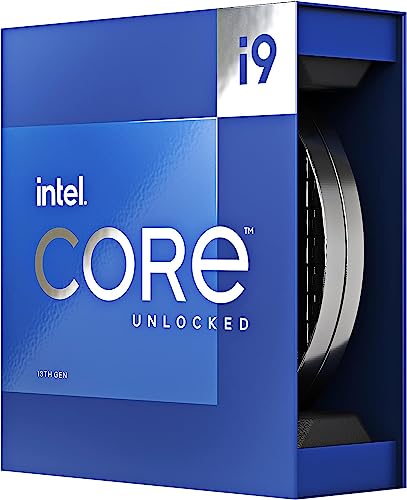
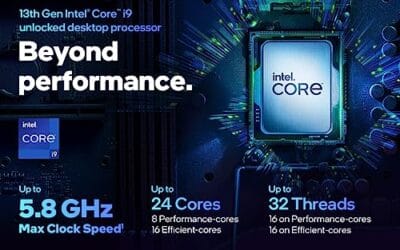
Cross-shopping Intel is reasonable too, particularly for mixed workloads. The Intel Core i9-13900K, around $587.77 with a 4.8 rating and 24 cores split across 8 P-cores and 16 E-cores plus 36M of cache and boost up to 5.8 GHz, is a productivity-forward option that still games well. Match the chip to the work, not to the benchmark headline. For AMD-specific value picks, the best budget CPU 2026 guide rounds out the field.
Pros
- Massive multi-threaded performance for 4K video editing, 3D rendering, and complex data science workloads.
- High 5.8 GHz peak frequency provides excellent single-core performance for gaming and CAD applications.
- Integrated UHD Graphics 770 serves as a reliable backup for troubleshooting or non-gaming productivity setups.
- Broad platform compatibility across two motherboard generations and two different memory standards.
Cons
- High 125W base power and significant peak wattage require a high-end 360mm AIO or custom loop cooling.
- Requires a BIOS update on many Intel 600 series motherboards before the system will POST.
- Platform longevity is limited as LGA1700 is an established socket nearing the end of its release cycle.
The Intel Core i9-13900K represents the pinnacle of the 13th Gen Raptor Lake lineup, positioned as a flagship solution for users who refuse to compromise. With a total of 24 cores and 32 threads, it is specifically engineered for enthusiast gamers, streamers, and heavy content creators who frequently run demanding applications like Adobe Premiere Pro, DaVinci Resolve, or Blender.
The standout technical achievement here is the refined hybrid architecture. By pairing 8 high-frequency Performance-cores with 16 Efficiency-cores, the 13900K manages heavy compute loads without sacrificing the responsiveness of background applications. In real-world gaming, this typically translates to higher 1% low frame rates and smoother overall performance, especially when multitasking with OBS or Discord in the background.
Thermal management is a critical consideration for this chip. While the 125W base power seems manageable, the processor is designed to scale its power consumption significantly to maintain the 5.8 GHz boost clock. Users should expect high operating temperatures under sustained all-core loads, necessitating a robust cooling solution and a high-airflow case to prevent thermal throttling.
An honest trade-off for this level of performance is the power draw and the resulting heat output. This is not a 'set and forget' chip for budget cooling or small form factor builds without careful undervolting or power limiting. Additionally, while the support for DDR4 is a welcome cost-saving measure, the highest performance tiers are only unlocked when paired with high-frequency DDR5 memory.
Buy this if you are building a top-tier workstation or gaming rig and already have a 360mm liquid cooler and a high-wattage power supply. Skip this if you are primarily gaming at 4K where the GPU is the bottleneck, or if you prefer a more power-efficient system with lower cooling requirements.
| Feature | Specification |
|---|---|
| Core Count | 24 (8 P-cores + 16 E-cores) |
| Thread Count | 32 |
| Max Turbo Frequency | 5.8 GHz |
| P-core Base Frequency | 3.0 GHz |
| E-core Base Frequency | 2.2 GHz |
| Intel Smart Cache (L3) | 36 MB |
| Total L2 Cache | 32 MB |
| Processor Base Power | 125 W |
| Memory Support | DDR5 5600 / DDR4 3200 |
| PCIe Revision | 5.0 and 4.0 |
| Total CPU PCIe Lanes | 20 |
| Socket Support | LGA1700 |
| Integrated Graphics | Intel UHD Graphics 770 |
Socket and Chipset: This processor uses the LGA1700 socket. It is natively compatible with Intel 700 series motherboards (Z790, H770, B760). While it works with 600 series boards (Z690, H670, B660, H610), a BIOS update is almost certainly required for the system to boot if the board was manufactured before the 13th Gen launch.
Cooling Requirements: Given the 5.8 GHz boost clock and high core count, a premium 360mm or 420mm All-In-One (AIO) liquid cooler is strongly recommended. High-end dual-tower air coolers may suffice for gaming but will likely lead to thermal throttling during intensive multi-threaded rendering or stress testing.
Memory Selection: The i9-13900K supports both DDR4 and DDR5, but this is determined by your motherboard choice. For a flagship build, pairing this CPU with DDR5 5600MT/s or higher is recommended to avoid bandwidth bottlenecks in memory-sensitive applications and modern games.
Power Supply Guidance: Due to the high transient power spikes typical of i9 processors, ensure your PSU has sufficient headroom. For a build featuring this CPU and a high-end GPU like an RTX 4080 or 4090, a minimum of an 850W or 1000W 80 Plus Gold power supply is advised.
Operating System: To properly utilize the Intel Thread Director for efficient task scheduling between P-cores and E-cores, Windows 11 is highly recommended. While Windows 10 is supported, it may not always assign tasks to the optimal core type, potentially impacting performance.
Common questions
Is an X3D chip worth it for 4K gaming?
Usually not by much. At 4K the GPU is the limiter, so the cache advantage mostly disappears. You’ll see the biggest X3D gains at 1080p and 1440p where the CPU sets the frame ceiling. For pure 4K, a non-X3D part frees up budget for a stronger graphics card.
Do X3D chips run hotter?
Generally the opposite. Because X3D parts favor cache over peak clock, they often pull less power in games and run cooler than their standard siblings under a gaming load. That said, the stacked cache can be sensitive to voltage, so most owners pair them with a decent air or 240mm liquid cooler and leave the settings sane.
Can I overclock an X3D Ryzen?
Traditional all-core overclocking is limited on X3D silicon to protect the cache die, but modern X3D chips support Precision Boost Overdrive and Curve Optimizer for a safe tuning boost. You won’t get huge manual gains, though the automated tools claw back a bit of the clock deficit without much fuss.
Does the extra cache help productivity work?
Sometimes. Cache-friendly tasks like certain compiles and some simulation software benefit, but most encoding and rendering jobs care more about clocks and core count. For a work-first machine, a non-X3D chip or a high-clock alternative typically finishes the job faster for less money.
Will an X3D chip bottleneck a mid-range GPU?
No, and that’s part of the point. A strong CPU won’t hold back a mid-range card. If anything you’ll be GPU-limited first, which means a cheaper non-X3D chip would deliver the same frames. Match the CPU tier to the GPU tier and your resolution, and don’t overspend on cache you can’t use.































Write Your Review
No reviews yet. Be the first to share your experience!