

If you’ve shopped for a CPU in the last few years, you’ve probably seen the word “chiplet” thrown around like everyone already knows what it means. They don’t. The short version is that a chiplet is a small, separate piece of silicon that gets combined with other small pieces to build one finished processor, instead of carving the whole chip out of a single slab.
That sounds like a manufacturing footnote, but it quietly reshaped how AMD, and increasingly everyone else, builds the processors that go into gaming rigs and workstations. It’s the reason a 16-core desktop part can cost what it does. If you’re weighing options in our guides to the best gaming CPU or the best budget CPU, knowing how chiplets work explains a lot of the pricing you’re staring at.
The short answer
Chiplet design means a processor is assembled from multiple smaller dies rather than one big monolithic die. Each little die, the chiplet, handles a specific job. On AMD’s Ryzen chips, for example, the CPU cores live on one or two compute dies while memory controllers and I/O live on a separate die built on an older, cheaper process. A tiny high-speed link stitches them together so the whole thing behaves like one chip to your operating system.
Why bother? Because small dies are cheaper to make and easier to get right. Fewer defects per die, better yields, lower cost. That’s the whole pitch in one breath. Not every chip uses it, though. Intel’s Raptor Lake parts, like the Core i9-14900K, stayed largely monolithic through their run, which makes them a useful point of comparison.

Pros
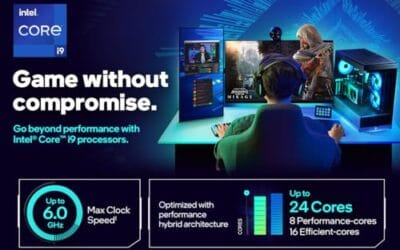
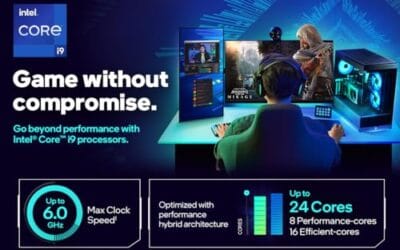
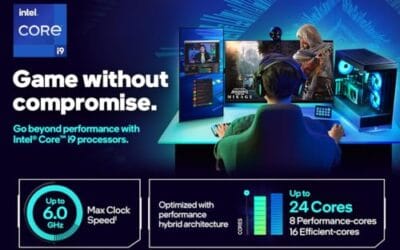
- Industry-leading 6.0GHz out-of-the-box boost clock for single-threaded applications.
- Massive 32-thread capacity excels in multi-threaded workloads like 4K video rendering and 3D modeling.
- Compatible with existing LGA 1700 motherboards via BIOS updates, extending the life of 600-series boards.
- Integrated Intel UHD Graphics 770 provides a fallback for troubleshooting and QuickSync hardware acceleration.
- Highly binned silicon offers significant tuning potential for users with high-end cooling solutions.
Cons
- High 253W maximum turbo power requires premium 360mm or 420mm AIO liquid cooling for sustained loads.
- Aggressive stock voltage curves can lead to thermal throttling on standard air coolers or entry-level AIOs.
- Final generation for the LGA 1700 socket, limiting future CPU upgrade paths without a motherboard change.
- Significant power draw necessitates a high-quality PSU with sufficient 12V EPS overhead.
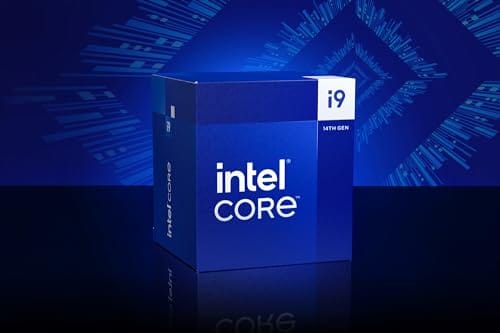
The Intel Core i9-14900K represents the enthusiast-tier peak of the Raptor Lake Refresh lineup, targeting professional creators and gamers who require the highest possible clock speeds. With 24 cores and 32 threads, it is designed to handle simultaneous gaming, streaming, and recording without the performance degradation typically seen on lower-core-count processors.
Technical performance is defined by its 6.0GHz Thermal Velocity Boost, a milestone frequency that pushes the limits of the LGA 1700 platform. In real-world gaming, this translates to high frame ceilings in 1080p and 1440p scenarios, while the 16 Efficient-cores provide the necessary throughput for background tasks and heavy multi-threaded productivity suites like Adobe Premiere Pro and DaVinci Resolve.
Build quality and reliability are consistent with Intel's high-end silicon, though the chip is notoriously demanding regarding thermals. The integrated heat spreader (IHS) must dissipate significant heat during 250W+ bursts, making the choice of thermal interface material and mounting pressure critical for maintaining stability under full load.
The primary trade-off for this level of performance is power consumption and heat. Users should expect the processor to hit its thermal junction maximum (TjMax) quickly during synthetic stress tests if paired with inadequate cooling. It is a processor that requires manual tuning of power limits (PL1 and PL2) to balance efficiency and performance effectively.
Final verdict: Buy this processor if you are an enthusiast with a high-end Z790 motherboard and a 360mm+ liquid cooler who needs the absolute fastest gaming and multitasking performance currently available on the Intel platform. Skip this if you prefer a plug-and-play experience with low power draw or are building in a small form factor case with limited cooling clearance.
| Cores / Threads | 24 (8P + 16E) / 32 |
| Max Turbo Frequency | 6.0 GHz |
| Intel Smart Cache (L3) | 36 MB |
| Total L2 Cache | 32 MB |
| Processor Base Power | 125 W |
| Max Turbo Power | 253 W (Listed as 250W in specs) |
| Socket Support | LGA 1700 |
| Memory Support | DDR5 5600 / DDR4 3200 |
| PCIe Lanes | 20 Total (Up to Gen 5.0) |
| Integrated Graphics | Intel UHD Graphics 770 |
Motherboard and Chipset: The i9-14900K requires an LGA 1700 socket. While it is compatible with older Z600-series motherboards, a BIOS update is mandatory for the system to POST. For optimal power delivery and PCIe 5.0 support, a high-end Z790 motherboard with robust VRMs is strongly recommended to handle the 250W+ power excursions.
Cooling Requirements: Due to the 6.0GHz boost clock and high TDP, air cooling is generally not recommended for this tier unless using a flagship dual-tower cooler with a contact frame. A 360mm or 420mm All-In-One (AIO) liquid cooler is the standard recommendation to prevent thermal throttling during intensive rendering or compilation tasks.
Memory Selection: This CPU supports both DDR4 and DDR5, but the motherboard determines which one you must use. For maximum performance in modern titles and professional apps, pairing this with a DDR5-7200+ kit on a Z790 platform is the ideal configuration, though DDR4 remains a viable cost-saving path for those upgrading from 12th gen.
Power Supply Guidance: Given the potential for 300W+ spikes from the CPU alone, especially when overclocked, a high-quality 850W or 1000W 80 Plus Gold PSU is recommended. Ensure your PSU has at least two 8-pin EPS (CPU) connectors to provide stable voltage to the motherboard's power phases.
Operating System: To properly utilize the Intel Thread Director and the hybrid core architecture, Windows 11 is the recommended operating system. Windows 10 may not efficiently schedule tasks between the P-cores and E-cores, potentially leading to inconsistent performance in multitasking scenarios.
The longer explanation
Picture a silicon wafer, a big circular disc that a fab slices into individual chips. Defects land on that wafer randomly. If you build one enormous die and a single defect lands on it, the whole die can be scrap. Build eight small dies in that same area, and a stray defect ruins one small die while the other seven ship. That yield math is the beating heart of the chiplet idea.
There’s a second angle too. Not every part of a processor benefits from the newest, most expensive manufacturing process. CPU cores gain real speed and efficiency from a cutting-edge node. Memory controllers and USB logic barely care. So AMD builds the cores on an advanced node and parks the I/O on a mature, cheaper one. You pay for the fancy silicon only where it earns its keep. Mix and match. That flexibility is hard to pull off with one giant monolithic die.
It also changes how a company builds an entire product stack. Once you’ve validated a single compute die, you can drop one of them into a mid-range part and two of them into a flagship, reusing the same silicon across the lineup. That reuse cuts design cost and shortens the time between a chip working in a lab and shipping in a box. A monolithic approach usually means designing a fresh die for each tier, which is slower and far more expensive. So chiplets don’t just lower the cost of one chip, they lower the cost of an entire family of them.
History: how we got here
For decades, “bigger monolithic die” was simply how progress happened. Shrink the transistors, cram in more, ship a single slab. That worked while each new process node stayed affordable. Then the nodes got brutally expensive, and yields on huge dies got painful. Something had to give.
AMD made the loud bet. With the first Ryzen and EPYC parts in 2017, and much more aggressively in the generations after, it split the processor into compute dies plus a central I/O die. That’s how AMD reached high core counts at prices that rattled the market. Intel spent years perfecting large monolithic designs, and its Raptor Lake chips still lean that way, but it has since moved toward tiled and stacked approaches of its own. The industry didn’t drift here by accident. Economics pushed it.
Why it works this way
The tradeoff nobody advertises is latency. When cores on one chiplet need to talk to cores on another, or reach the memory controller sitting on a separate die, that trip takes a little longer than it would on a single piece of silicon. For most workloads you’ll never notice. For a handful of latency-sensitive games, the gap can show up in frame times, which is exactly why AMD’s cache-heavy X3D parts exist to paper over it.
So it’s a bargain, not a free lunch. You trade a sliver of raw latency for far better manufacturing economics and much higher core counts at a given price. For anyone doing rendering, compilation, or heavy multitasking, that trade is lopsided in your favor. A monolithic chip can still edge ahead in pure single-thread responsiveness, which is part of why our best CPU for gaming picks don’t all land on the same architecture.
The link between chiplets carries a small power cost too. Shuttling data across that interconnect uses energy that a monolithic layout wouldn’t spend, so idle power on some chiplet chips runs a touch higher. Designers accept it because the yield and cost wins dwarf the penalty. And they keep improving the interconnect every generation, tightening latency and trimming that power draw, so the gap narrows with each release rather than standing still.
When you’d want this
You want a chiplet-based chip when core count matters more than shaving the last microsecond off memory latency. Video editors, 3D artists, streamers running an encode alongside a game, developers compiling large projects. These people feed on threads, and chiplet designs deliver threads cheaply. The extra cores pay for themselves the first time a render finishes early.
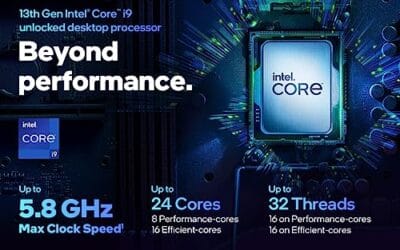
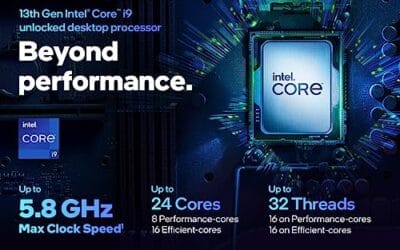
You’d lean the other way, toward a strong monolithic part, if your workload is a few lightly-threaded games and snappy desktop use above all. A chip like the Core i9-13900K, with its 8 performance cores and 16 efficient cores plus 36MB of cache reaching up to 5.8 GHz, shows how far a monolithic design can push clock speed and responsiveness. It carries a higher sticker at around $587.77, but for latency-hungry work that focus can be worth it.
Pros
- Massive multi-threaded performance for 4K video editing, 3D rendering, and complex data science workloads.
- High 5.8 GHz peak frequency provides excellent single-core performance for gaming and CAD applications.
- Integrated UHD Graphics 770 serves as a reliable backup for troubleshooting or non-gaming productivity setups.
- Broad platform compatibility across two motherboard generations and two different memory standards.
Cons
- High 125W base power and significant peak wattage require a high-end 360mm AIO or custom loop cooling.
- Requires a BIOS update on many Intel 600 series motherboards before the system will POST.
- Platform longevity is limited as LGA1700 is an established socket nearing the end of its release cycle.
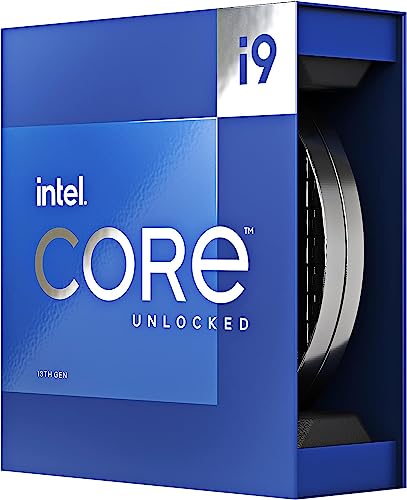
The Intel Core i9-13900K represents the pinnacle of the 13th Gen Raptor Lake lineup, positioned as a flagship solution for users who refuse to compromise. With a total of 24 cores and 32 threads, it is specifically engineered for enthusiast gamers, streamers, and heavy content creators who frequently run demanding applications like Adobe Premiere Pro, DaVinci Resolve, or Blender.
The standout technical achievement here is the refined hybrid architecture. By pairing 8 high-frequency Performance-cores with 16 Efficiency-cores, the 13900K manages heavy compute loads without sacrificing the responsiveness of background applications. In real-world gaming, this typically translates to higher 1% low frame rates and smoother overall performance, especially when multitasking with OBS or Discord in the background.
Thermal management is a critical consideration for this chip. While the 125W base power seems manageable, the processor is designed to scale its power consumption significantly to maintain the 5.8 GHz boost clock. Users should expect high operating temperatures under sustained all-core loads, necessitating a robust cooling solution and a high-airflow case to prevent thermal throttling.
An honest trade-off for this level of performance is the power draw and the resulting heat output. This is not a 'set and forget' chip for budget cooling or small form factor builds without careful undervolting or power limiting. Additionally, while the support for DDR4 is a welcome cost-saving measure, the highest performance tiers are only unlocked when paired with high-frequency DDR5 memory.
Buy this if you are building a top-tier workstation or gaming rig and already have a 360mm liquid cooler and a high-wattage power supply. Skip this if you are primarily gaming at 4K where the GPU is the bottleneck, or if you prefer a more power-efficient system with lower cooling requirements.
| Feature | Specification |
|---|---|
| Core Count | 24 (8 P-cores + 16 E-cores) |
| Thread Count | 32 |
| Max Turbo Frequency | 5.8 GHz |
| P-core Base Frequency | 3.0 GHz |
| E-core Base Frequency | 2.2 GHz |
| Intel Smart Cache (L3) | 36 MB |
| Total L2 Cache | 32 MB |
| Processor Base Power | 125 W |
| Memory Support | DDR5 5600 / DDR4 3200 |
| PCIe Revision | 5.0 and 4.0 |
| Total CPU PCIe Lanes | 20 |
| Socket Support | LGA1700 |
| Integrated Graphics | Intel UHD Graphics 770 |
Socket and Chipset: This processor uses the LGA1700 socket. It is natively compatible with Intel 700 series motherboards (Z790, H770, B760). While it works with 600 series boards (Z690, H670, B660, H610), a BIOS update is almost certainly required for the system to boot if the board was manufactured before the 13th Gen launch.
Cooling Requirements: Given the 5.8 GHz boost clock and high core count, a premium 360mm or 420mm All-In-One (AIO) liquid cooler is strongly recommended. High-end dual-tower air coolers may suffice for gaming but will likely lead to thermal throttling during intensive multi-threaded rendering or stress testing.
Memory Selection: The i9-13900K supports both DDR4 and DDR5, but this is determined by your motherboard choice. For a flagship build, pairing this CPU with DDR5 5600MT/s or higher is recommended to avoid bandwidth bottlenecks in memory-sensitive applications and modern games.
Power Supply Guidance: Due to the high transient power spikes typical of i9 processors, ensure your PSU has sufficient headroom. For a build featuring this CPU and a high-end GPU like an RTX 4080 or 4090, a minimum of an 850W or 1000W 80 Plus Gold power supply is advised.
Operating System: To properly utilize the Intel Thread Director for efficient task scheduling between P-cores and E-cores, Windows 11 is highly recommended. While Windows 10 is supported, it may not always assign tasks to the optimal core type, potentially impacting performance.
What to look for in a chiplet CPU
Don’t shop for “chiplet” as a checkbox. Shop for the results it produces. Check the core and thread count against what your software actually uses, then check the cache. On chiplet parts, a large L3 cache is the main tool for hiding cross-die latency, which is why the cache-stacked variants get recommended for gaming so often.
Look at the platform around it too. Memory support, motherboard cost, cooler headroom. A cheaper chiplet CPU can land you on a pricier board, and that changes the real total. Pair the chip with the right memory speed, because chiplet designs are more sensitive to memory tuning than monolithic ones. Our best budget CPU for productivity roundup weighs those platform costs so you’re not surprised at checkout.
Common misconceptions
The biggest myth is that chiplet automatically means slower. It doesn’t. In multi-core work it’s frequently faster than a comparably priced monolithic chip, because you simply get more cores for the money. The latency penalty is narrow and specific, not a blanket handicap.
Another myth: that chiplets are a gimmick invented to cut corners. They’re a deliberate response to physics and cost. Making one perfect giant die on a leading node is getting harder and pricier every generation, and chiplets are how designers keep pushing core counts without the price spiraling. Calling that a shortcut misses the point. It’s engineering around a real wall.
Frequently asked
Is chiplet the same as multi-chip module?
They’re close cousins. A multi-chip module is the broad umbrella for packaging several dies together. Chiplet design is the modern, purpose-built version where each small die is engineered from the start to be one interchangeable block of a larger processor. All chiplets sit inside a module, but not every old module was a chiplet design.
Do chiplets hurt gaming performance?
Rarely enough to notice on most titles. A few latency-sensitive games can show slightly worse frame consistency, but large L3 cache and cache-stacked chips close most of that gap. For the majority of players, a good chiplet CPU games just fine.
Does Intel use chiplets?
Its Raptor Lake desktop parts, including the Core i9-14900K, are largely monolithic. Intel has moved toward tiled and stacked designs in newer product lines, so the answer is shifting. But the chips many people still buy today are single-die.
Why are chiplet CPUs often cheaper for the core count?
Small dies yield better and cost less to manufacture, and the cheaper I/O die uses an older, less expensive process. Those savings let AMD stack cores at prices a giant monolithic die can’t match. That’s the entire economic advantage in one sentence.
Should I buy chiplet or monolithic?
Buy for your workload, not the buzzword. Threaded, creative, or multitasking work loves the cheap cores of a chiplet chip. Pure high-refresh gaming and snappy light use can favor a strong monolithic part or a cache-heavy chiplet variant. Match the chip to what you actually run all day.
Does chiplet design affect power draw?
A little. Moving data across the die-to-die interconnect uses energy a single die wouldn’t, so idle and light-load power can run slightly higher on some chiplet chips. Under heavy multi-core load, the efficiency of the newer core node usually more than makes up for it. For most builds the difference is minor and won’t change your cooler or power supply choice.




























Write Your Review
No reviews yet. Be the first to share your experience!