Is A Gaming Keyboard Worth It Explained: What It Actually Does for Your PC
You can play games perfectly well on the $15 membrane keyboard that came with your PC. Millions do.

We independently review everything we recommend. When you buy through our links, we may earn a commission. As an Amazon Associate we earn from qualifying purchases. Learn more ›
You can play games perfectly well on the $15 membrane keyboard that came with your PC. Millions do.
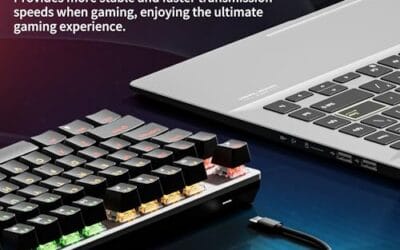
A mechanical keyboard uses an individual spring-loaded switch under every key, instead of the single rubber membrane sheet that sits under a typical office.
Ask ten competitive gamers which switch feels faster and you'll get a near-even split, yet the actuation-force gap between a typical linear and a typical.
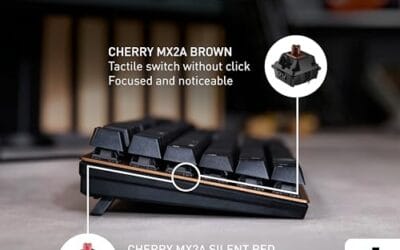
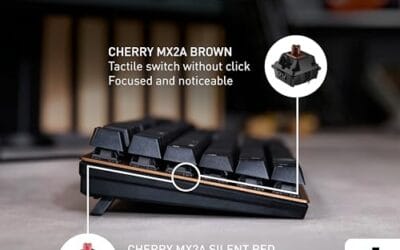
Every key on a mechanical keyboard has a moment where the press actually registers, a point partway down the travel where the switch tells your PC "yes.
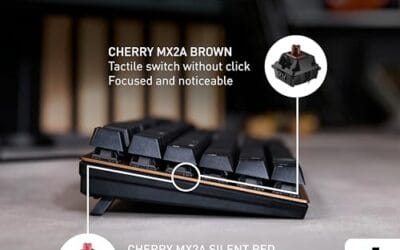
Wireless keyboards used to add a few milliseconds of input lag that competitive players could feel. That gap is basically gone.
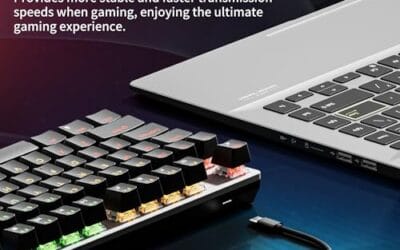
Roughly a quarter of desk width vanishes when you drop from a full-size keyboard to a compact one, and that reclaimed space is why the 65 percent and 75.
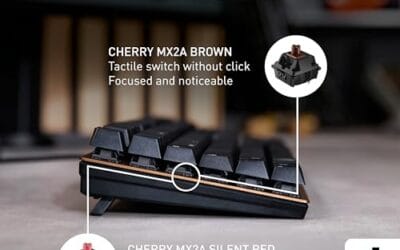
Polling rate is one of those keyboard specs that sounds intimidating and turns out to be simple once someone explains it plainly.
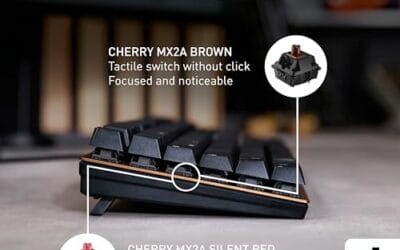
Keyboard sizes get described in percentages, and the labels aren't obvious until someone explains them.
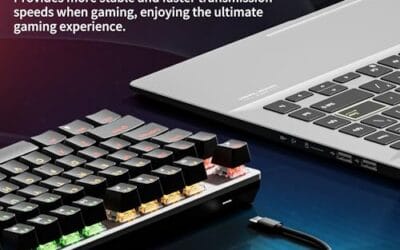
TKL and full-size keyboards can both be great for gaming, but they solve different desk problems.
This article covers n-key rollover explained using real product facts from the batch data. We checked title specs, price, rating, and basic fit for the task.