

Choosing the best CPU for programming in 2026 is less about chasing the biggest number on a box and more about matching cores, clocks, platform cost, and thermals to the way you build software. A fast chip can shorten compile times, keep containers responsive, and make an IDE feel less sluggish while 30 browser tabs, Docker, WSL, a database, and a local dev server are all open. We researched five desktop processors across $166 to $587.77, with ratings from 4.6 to 4.9, and focused on CPUs that make sense for serious coding rigs rather than general office PCs.
If you’re building a full workstation, the processor is only one part of the stack. Memory capacity matters for large projects, so our RAM guide for programming is a natural next stop. Storage affects indexing and dependency installs too, which is why an SSD for programming can be just as noticeable as a CPU upgrade in daily work. For mixed work and play, you’ll also want to compare these chips against our CPU picks for gaming, because a developer PC often has to do both.

Pros
- Industry-leading 6.0GHz out-of-the-box boost clock for single-threaded applications.
- Massive 32-thread capacity excels in multi-threaded workloads like 4K video rendering and 3D modeling.
- Compatible with existing LGA 1700 motherboards via BIOS updates, extending the life of 600-series boards.
- Integrated Intel UHD Graphics 770 provides a fallback for troubleshooting and QuickSync hardware acceleration.
- Highly binned silicon offers significant tuning potential for users with high-end cooling solutions.
Cons
- High 253W maximum turbo power requires premium 360mm or 420mm AIO liquid cooling for sustained loads.
- Aggressive stock voltage curves can lead to thermal throttling on standard air coolers or entry-level AIOs.
- Final generation for the LGA 1700 socket, limiting future CPU upgrade paths without a motherboard change.
- Significant power draw necessitates a high-quality PSU with sufficient 12V EPS overhead.
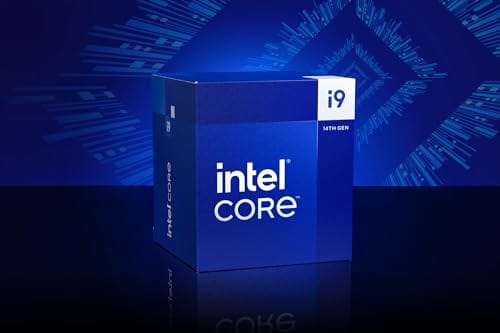
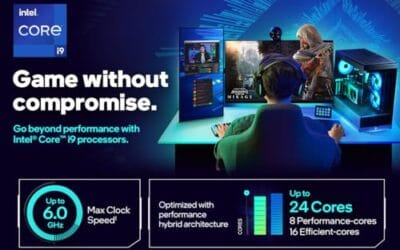
The Intel Core i9-14900K represents the enthusiast-tier peak of the Raptor Lake Refresh lineup, targeting professional creators and gamers who require the highest possible clock speeds. With 24 cores and 32 threads, it is designed to handle simultaneous gaming, streaming, and recording without the performance degradation typically seen on lower-core-count processors.
Technical performance is defined by its 6.0GHz Thermal Velocity Boost, a milestone frequency that pushes the limits of the LGA 1700 platform. In real-world gaming, this translates to high frame ceilings in 1080p and 1440p scenarios, while the 16 Efficient-cores provide the necessary throughput for background tasks and heavy multi-threaded productivity suites like Adobe Premiere Pro and DaVinci Resolve.
Build quality and reliability are consistent with Intel's high-end silicon, though the chip is notoriously demanding regarding thermals. The integrated heat spreader (IHS) must dissipate significant heat during 250W+ bursts, making the choice of thermal interface material and mounting pressure critical for maintaining stability under full load.
The primary trade-off for this level of performance is power consumption and heat. Users should expect the processor to hit its thermal junction maximum (TjMax) quickly during synthetic stress tests if paired with inadequate cooling. It is a processor that requires manual tuning of power limits (PL1 and PL2) to balance efficiency and performance effectively.
Final verdict: Buy this processor if you are an enthusiast with a high-end Z790 motherboard and a 360mm+ liquid cooler who needs the absolute fastest gaming and multitasking performance currently available on the Intel platform. Skip this if you prefer a plug-and-play experience with low power draw or are building in a small form factor case with limited cooling clearance.
| Cores / Threads | 24 (8P + 16E) / 32 |
| Max Turbo Frequency | 6.0 GHz |
| Intel Smart Cache (L3) | 36 MB |
| Total L2 Cache | 32 MB |
| Processor Base Power | 125 W |
| Max Turbo Power | 253 W (Listed as 250W in specs) |
| Socket Support | LGA 1700 |
| Memory Support | DDR5 5600 / DDR4 3200 |
| PCIe Lanes | 20 Total (Up to Gen 5.0) |
| Integrated Graphics | Intel UHD Graphics 770 |
Motherboard and Chipset: The i9-14900K requires an LGA 1700 socket. While it is compatible with older Z600-series motherboards, a BIOS update is mandatory for the system to POST. For optimal power delivery and PCIe 5.0 support, a high-end Z790 motherboard with robust VRMs is strongly recommended to handle the 250W+ power excursions.
Cooling Requirements: Due to the 6.0GHz boost clock and high TDP, air cooling is generally not recommended for this tier unless using a flagship dual-tower cooler with a contact frame. A 360mm or 420mm All-In-One (AIO) liquid cooler is the standard recommendation to prevent thermal throttling during intensive rendering or compilation tasks.
Memory Selection: This CPU supports both DDR4 and DDR5, but the motherboard determines which one you must use. For maximum performance in modern titles and professional apps, pairing this with a DDR5-7200+ kit on a Z790 platform is the ideal configuration, though DDR4 remains a viable cost-saving path for those upgrading from 12th gen.
Power Supply Guidance: Given the potential for 300W+ spikes from the CPU alone, especially when overclocked, a high-quality 850W or 1000W 80 Plus Gold PSU is recommended. Ensure your PSU has at least two 8-pin EPS (CPU) connectors to provide stable voltage to the motherboard's power phases.
Operating System: To properly utilize the Intel Thread Director and the hybrid core architecture, Windows 11 is the recommended operating system. Windows 10 may not efficiently schedule tasks between the P-cores and E-cores, potentially leading to inconsistent performance in multitasking scenarios.
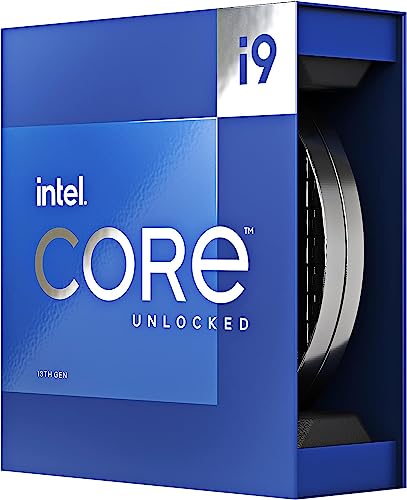
Pros
- Massive multi-threaded performance for 4K video editing, 3D rendering, and complex data science workloads.
- High 5.8 GHz peak frequency provides excellent single-core performance for gaming and CAD applications.
- Integrated UHD Graphics 770 serves as a reliable backup for troubleshooting or non-gaming productivity setups.
- Broad platform compatibility across two motherboard generations and two different memory standards.
Cons
- High 125W base power and significant peak wattage require a high-end 360mm AIO or custom loop cooling.
- Requires a BIOS update on many Intel 600 series motherboards before the system will POST.
- Platform longevity is limited as LGA1700 is an established socket nearing the end of its release cycle.
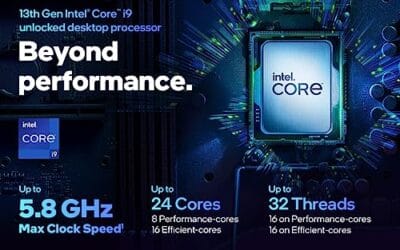
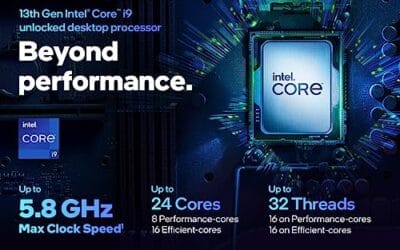
The Intel Core i9-13900K represents the pinnacle of the 13th Gen Raptor Lake lineup, positioned as a flagship solution for users who refuse to compromise. With a total of 24 cores and 32 threads, it is specifically engineered for enthusiast gamers, streamers, and heavy content creators who frequently run demanding applications like Adobe Premiere Pro, DaVinci Resolve, or Blender.
The standout technical achievement here is the refined hybrid architecture. By pairing 8 high-frequency Performance-cores with 16 Efficiency-cores, the 13900K manages heavy compute loads without sacrificing the responsiveness of background applications. In real-world gaming, this typically translates to higher 1% low frame rates and smoother overall performance, especially when multitasking with OBS or Discord in the background.
Thermal management is a critical consideration for this chip. While the 125W base power seems manageable, the processor is designed to scale its power consumption significantly to maintain the 5.8 GHz boost clock. Users should expect high operating temperatures under sustained all-core loads, necessitating a robust cooling solution and a high-airflow case to prevent thermal throttling.
An honest trade-off for this level of performance is the power draw and the resulting heat output. This is not a 'set and forget' chip for budget cooling or small form factor builds without careful undervolting or power limiting. Additionally, while the support for DDR4 is a welcome cost-saving measure, the highest performance tiers are only unlocked when paired with high-frequency DDR5 memory.
Buy this if you are building a top-tier workstation or gaming rig and already have a 360mm liquid cooler and a high-wattage power supply. Skip this if you are primarily gaming at 4K where the GPU is the bottleneck, or if you prefer a more power-efficient system with lower cooling requirements.
| Feature | Specification |
|---|---|
| Core Count | 24 (8 P-cores + 16 E-cores) |
| Thread Count | 32 |
| Max Turbo Frequency | 5.8 GHz |
| P-core Base Frequency | 3.0 GHz |
| E-core Base Frequency | 2.2 GHz |
| Intel Smart Cache (L3) | 36 MB |
| Total L2 Cache | 32 MB |
| Processor Base Power | 125 W |
| Memory Support | DDR5 5600 / DDR4 3200 |
| PCIe Revision | 5.0 and 4.0 |
| Total CPU PCIe Lanes | 20 |
| Socket Support | LGA1700 |
| Integrated Graphics | Intel UHD Graphics 770 |
Socket and Chipset: This processor uses the LGA1700 socket. It is natively compatible with Intel 700 series motherboards (Z790, H770, B760). While it works with 600 series boards (Z690, H670, B660, H610), a BIOS update is almost certainly required for the system to boot if the board was manufactured before the 13th Gen launch.
Cooling Requirements: Given the 5.8 GHz boost clock and high core count, a premium 360mm or 420mm All-In-One (AIO) liquid cooler is strongly recommended. High-end dual-tower air coolers may suffice for gaming but will likely lead to thermal throttling during intensive multi-threaded rendering or stress testing.
Memory Selection: The i9-13900K supports both DDR4 and DDR5, but this is determined by your motherboard choice. For a flagship build, pairing this CPU with DDR5 5600MT/s or higher is recommended to avoid bandwidth bottlenecks in memory-sensitive applications and modern games.
Power Supply Guidance: Due to the high transient power spikes typical of i9 processors, ensure your PSU has sufficient headroom. For a build featuring this CPU and a high-end GPU like an RTX 4080 or 4090, a minimum of an 850W or 1000W 80 Plus Gold power supply is advised.
Operating System: To properly utilize the Intel Thread Director for efficient task scheduling between P-cores and E-cores, Windows 11 is highly recommended. While Windows 10 is supported, it may not always assign tasks to the optimal core type, potentially impacting performance.

Pros
- 5.3GHz boost clock is competitive for 1080p gaming frame rates in single-threaded workloads
- 38MB combined cache (L2 + L3) reduces latency compared to prior Ryzen 5000 series chips
- AM5 socket offers a longer upgrade path than the now-retired AM4 platform
- Integrated Radeon Graphics useful for POST testing before discrete GPU installation
Cons
- Zero verified owner reviews at time of writing - real-world reliability data is absent
- 105W TDP runs warm under load and requires a quality cooler not included in the box
- AM5 platform mandates DDR5 memory, adding cost over DDR4-compatible alternatives
The AMD Ryzen 5 7600X is a mid-range desktop CPU aimed at custom PC builders moving to the AM5 platform who want capable gaming and general productivity performance without the cost of an 8-core chip. Combining 6 Zen 4 cores with a 5.3GHz max boost clock on a 5nm process node, this processor targets 1080p and 1440p gaming builds and light multitasking workloads. It is best suited for builders pairing it with a mid-range GPU like an RTX 4060 or RX 7600, not users running heavily threaded workloads like 3D rendering or video encoding where more cores pay off.
The Zen 4 architecture is the headline story here. Moving from 7nm to 5nm compared to Ryzen 5000 series chips, AMD extracted meaningful improvements in instructions-per-clock alongside higher boost frequencies. The 5.3GHz ceiling is the highest base boost available on a Ryzen 5 chip at this tier, and third-party benchmark data from sources like GamersNexus and Hardware Unboxed has shown the 7600X trading blows with Intel's Core i5-13600K in gaming, with the outcome varying by title and memory configuration. The 32MB L3 cache, while smaller than the X3D variants, still provides a solid hit rate for gaming workloads. Pairing the chip with fast DDR5 memory matters here - slower kits can leave measurable frame rate on the table.
AMD has not bundled a stock cooler with the 7600X, which is worth noting upfront. The 105W TDP - and the chip's tendency to spike toward its 142W Package Power Tracking limit under boost - means a quality 240mm AIO or a strong tower air cooler like a Noctua NH-D15 or be quiet! Dark Rock Pro is the practical minimum for sustained performance. The AM5 platform's Socket AM5 uses LGA-style contact points, a change from AM4's PGA design, so handling requires care during installation.
There are several considerations worth flagging before purchasing. Most importantly, this listing carries no verified owner reviews at the time of writing, which makes it genuinely difficult to assess real-world quality consistency, shipping condition, or seller reliability for this specific listing. Buyers should treat this as an early or low-traffic listing and cross-reference with reviews of the same chip from other verified retailers. Additionally, the 7600X runs hotter than the non-X variant (7600) at stock settings, and some owners of the broader 7600X have reported the chip benefits from a slight power limit reduction in BIOS without meaningful performance loss - a consideration for less experienced builders. The AM5 platform's DDR5 requirement also adds to total build cost compared to B660 or B760 Intel boards that still accept DDR4.
Overall, the Ryzen 5 7600X is a technically capable mid-range CPU with a well-documented architecture and a clear place in AM5 gaming builds - but the absence of any owner feedback on this specific listing is a real gap that cautious buyers should address before committing. Check for updated reviews from verified purchasers, compare pricing against the non-X Ryzen 5 7600 which runs cooler and costs less at similar gaming performance, and confirm the seller's return policy before finalizing the order.
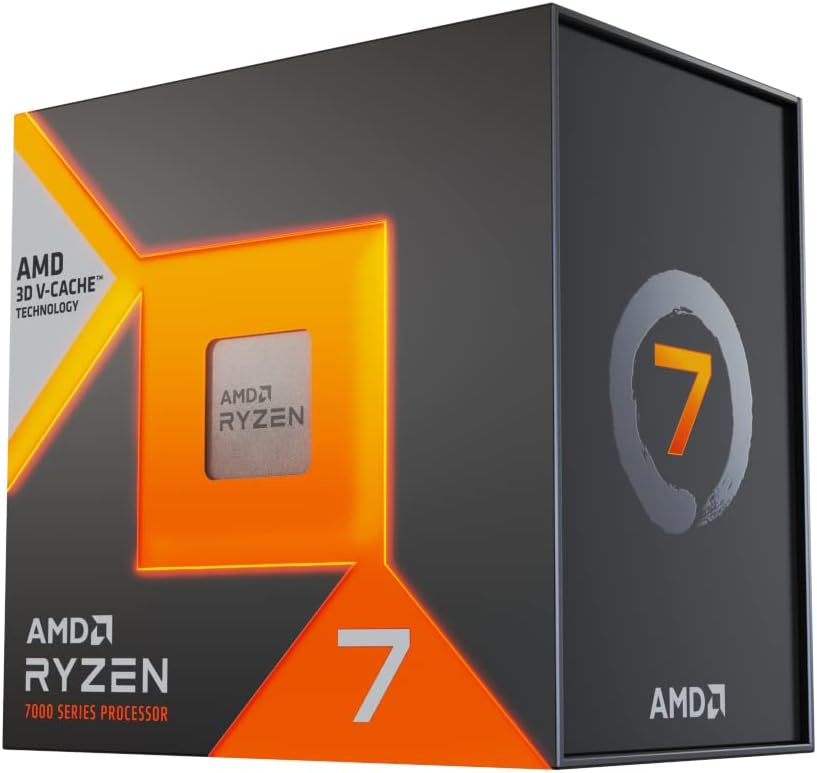
Pros
- 96MB 3D V-Cache is the largest L3 pool in this CPU price tier
- 5nm process keeps power draw reasonable for an 8-core chip
- AM5 socket offers a clear upgrade path to future Ryzen generations
- Integrated Radeon graphics add flexibility during initial build setup
Cons
- No reviews available yet - long-term reliability data cannot be assessed at this time
- Requires DDR5 RAM and AM5 motherboard, adding significant platform cost for new builders
- 4.2GHz base clock trails competing Intel chips in single-threaded non-gaming workloads
The AMD Ryzen 7 7800X3D is a mid-to-high-end desktop CPU aimed at custom PC builders and dedicated gamers who want strong gaming frame rates without stepping up to flagship chip pricing. Combining 8 Zen 4 cores with AMD's 3D V-Cache technology and a total of 96MB of L3 cache, this processor targets CPU-limited gaming scenarios where cache depth has a measurable impact on frame rates. It is best suited for builders pairing it with a capable GPU on an AM5 motherboard, not buyers looking for a complete prebuilt system or a chip optimized for heavy multi-threaded workloads like 3D rendering or video encoding.
The 3D V-Cache architecture is the defining feature here. By stacking additional L3 cache directly on the die using AMD's chiplet bonding process, the 7800X3D reduces the frequency of slower main memory accesses in games that repeatedly pull from the same data sets. In practical terms, third-party benchmarks from outlets like GamersNexus and Hardware Unboxed have shown the 7800X3D outpacing higher-clocked non-cache chips in titles like Cyberpunk 2077, Hogwarts Legacy, and Far Cry 6 at 1080p, where CPU bottlenecks are most visible. Paired with a mid-range or better GPU, the chip holds its own at 1440p as well, though gains narrow as GPU load increases.
AMD built the 7800X3D on a 5nm process node, which contributes to a relatively controlled thermal profile given the cache stack. A quality 240mm AIO or a premium tower air cooler is sufficient to keep the chip within its 89 degrees Celsius Tjmax ceiling under sustained gaming loads. The AM5 platform also brings PCIe 5.0 support for both the primary GPU slot and M.2 NVMe storage, which adds practical longevity for builders who plan to upgrade components over time rather than replacing the entire system.
There are a few considerations worth noting before purchasing. This listing currently carries no owner reviews, which means real-world reliability feedback, out-of-box quality consistency, and reseller fulfillment experience cannot be evaluated from available data alone. Buyers should treat this as an unverified listing and cross-reference feedback from other retailers or community sources before committing. Additionally, the AM5 platform requires DDR5 memory, which adds cost for builders transitioning from older DDR4 systems. The 4.2GHz base clock also means the 7800X3D is not the strongest choice for workloads that favor high single-threaded clock speeds over cache depth, such as certain simulation or productivity applications.
Overall, the Ryzen 7 7800X3D appears to be a well-regarded gaming CPU based on its architectural specifications and the broader reception of AMD's 3D V-Cache platform, but the absence of any owner reviews on this specific listing warrants caution. Builders are encouraged to verify current seller feedback, check fulfillment source, and confirm DDR5 platform costs are accounted for in the total build budget before finalizing a purchase decision.

Pros
- Best-in-class gaming performance thanks to the combination of Zen 5 IPC gains and 3D V-Cache technology
- AM5 socket compatibility makes it an easy upgrade for existing Ryzen 7000 series platform owners
- Excellent power efficiency relative to its performance tier reduces long-term energy costs
- Outstanding user satisfaction reflected in a near-perfect rating from thousands of verified buyers
- High boost clock of 5.2GHz ensures strong performance in both gaming and productivity tasks
Cons
- Cooler is not included in the box, adding to the total system cost for new builders
- Premium pricing puts it at the higher end of the consumer CPU market, which may not suit budget-focused builds
- Requires an AM5 motherboard, so users on older AM4 platforms will need a full platform upgrade
The AMD Ryzen 7 9800X3D is AMD's flagship gaming processor for the desktop market, sitting at the top of the Ryzen 9000 series lineup. Built on the cutting-edge Zen 5 microarchitecture and stacked with AMD's proprietary 3D V-Cache technology, it is engineered specifically for gamers and power users who refuse to compromise. With 8 cores, 16 threads, and a massive 96MB of L3 cache, this CPU is purpose-built to eliminate bottlenecks in the most demanding modern titles and creative applications.
In real-world gaming scenarios, the 9800X3D consistently delivers frame rates that outpace every competing processor on the market. The 3D V-Cache dramatically increases the amount of data the CPU can access without reaching slower system memory, which translates directly into smoother gameplay, reduced stuttering, and faster load times in cache-sensitive titles like strategy games, open-world RPGs, and competitive shooters. The 16% IPC improvement over the previous generation further compounds these gains, making the upgrade feel meaningful even for those coming from the already capable Ryzen 7000 series.
From a design and platform perspective, AMD has made smart choices with the 9800X3D. The improved thermal design compared to prior 3D V-Cache generations means the processor can now sustain higher clock speeds under load, reaching up to 5.2GHz boost. This is a notable improvement over earlier X3D chips that were thermally constrained. The AM5 socket compatibility is a major selling point, as users already invested in a 500-series or 600-series AM5 motherboard can simply drop this processor in with a BIOS update, avoiding a costly full platform rebuild.
There are a few considerations worth noting. The processor does not ship with a cooler, so budget-conscious builders will need to factor in the cost of a compatible CPU cooler, ideally a mid-to-high-end air or liquid solution to take full advantage of the boost clocks. Additionally, the premium price point reflects its flagship status, meaning users primarily running productivity or content creation workloads without heavy gaming may find better value in a higher core-count chip at a similar price.
Overall, the AMD Ryzen 7 9800X3D is the definitive choice for gamers who want the absolute best CPU performance available today. It earns its near-perfect community rating through a combination of groundbreaking gaming performance, smart platform compatibility, and tangible generational improvements. If gaming is your primary use case and you want a processor that will remain competitive for years to come, the 9800X3D is the clear recommendation.
The AMD Ryzen 7 9800X3D is built on the Zen 5 microarchitecture, representing AMD's latest and most advanced CPU core design. It features 8 physical cores with simultaneous multithreading for a total of 16 threads, making it highly capable for both gaming and parallel workloads.
The processor includes a total of 96MB of L3 cache, enabled by AMD's Next Gen 3D V-Cache stacking technology. This is the primary driver of its exceptional gaming performance. The boost clock reaches up to 5.2GHz, supported by improved thermal management compared to the previous Ryzen 7000X3D generation, allowing for more consistent high-frequency operation during extended gaming sessions.
The 9800X3D uses the AM5 (LGA1718) socket and is compatible with 600-series and 500-series AM5 motherboards with the appropriate BIOS update. It supports DDR5 memory and PCIe 5.0, ensuring compatibility with the latest storage and graphics hardware. A CPU cooler is not included and must be purchased separately. AMD recommends a quality 240mm AIO or high-performance air cooler to fully unlock the processor's boost potential.
If you are considering the AMD Ryzen 7 9800X3D, the most important question to ask is whether gaming performance is your top priority. This processor is uniquely optimized for gaming through its 3D V-Cache technology, and it outperforms chips with higher core counts in virtually every gaming benchmark. For gamers, it is the best CPU money can buy at this tier.
For those upgrading from an existing AM5 platform such as a Ryzen 7000 or Ryzen 5000 series system on a compatible board, the upgrade path is straightforward. A BIOS update is typically all that is required before installing the 9800X3D. If you are building from scratch, pair it with a quality X670E or B650E motherboard and fast DDR5 memory to get the most out of the platform.
Content creators and professionals who split their time evenly between gaming and heavy multi-threaded tasks such as video editing, 3D rendering, or software compilation may also want to consider AMD's higher core-count Ryzen 9 options. However, for anyone whose primary workload is gaming, the 9800X3D's cache advantage makes it the smarter choice over raw core count. Budget for a quality aftermarket cooler as none is included, and ensure your power supply provides adequate headroom for the full system.
Who this guide is for
This guide is for programmers building or upgrading a desktop PC for real local work: compiling code, running virtual machines, spinning up containers, indexing large repositories, using multiple monitors, and keeping a modern browser open all day. It’s especially useful if you’re choosing between high clock speed, lots of threads, and newer platform features instead of buying whatever CPU happens to be discounted this week.

It’s not aimed at tiny fanless boxes, laptops, or production servers. Those machines have different limits around power, memory channels, remote access, and uptime. Here, we’re focused on socketed desktop processors that can anchor a responsive coding workstation. No fluff. Just parts that make sense for a developer who’d rather spend time shipping code than waiting on a build.
What to look for in a CPU for programming
For programming, single-core speed still matters because many developer tools have serial steps: parsing, indexing, hot reload work, package manager operations, and portions of compilation. Multi-core performance matters too, especially for C++, Rust, Java, Android builds, container-heavy workflows, and virtual machines. A 6-core, 12-thread chip can feel quick for web work, while 8-core and 24-core options give you more room for parallel builds and background services.
The platform around the CPU matters almost as much as the CPU itself. Intel’s Core i9-13900K lists 24 cores, with 8 P-cores and 16 E-cores, 36M cache, and up to 5.8 GHz, which is a lot of scheduling headroom. AMD’s Ryzen 5 7600X lists 6 cores and 12 threads at a much lower $166 price. AMD’s Ryzen 7 7800X3D and Ryzen 7 9800X3D both list 8 cores and 16 threads, making them interesting for a machine that handles coding during the day and gaming after hours.
How we evaluated
We researched these five CPUs by looking at the listed core and thread counts, stated cache or boost details where available, current prices in the provided data, ratings, and the kind of developer each chip fits. We didn’t assume review counts because they weren’t available in the product data, and we didn’t invent extra specs that weren’t included in the titles. That’s important with CPUs, since one missing platform detail can change the total build cost.
We weighted three things most heavily: responsiveness for everyday coding, value at the full system level, and headroom for heavier jobs. A budget CPU can be the right call if it leaves money for 32GB or 64GB of RAM. A high-end Core i9 can be worth it if you compile huge projects every day. And an X3D Ryzen can make sense if your developer box is also your main gaming PC. Simple as that.
Our top picks
Best Overall: Intel Core i9-14900K
The Intel Core i9-14900K is our best overall pick for a programming workstation because it sits in the high-performance desktop lane without being the most expensive CPU in this group. At $469 with a 4.7 rating, it’s aimed at users who want a very fast desktop chip for compile-heavy projects, large IDEs, background containers, and multitasking. The product title doesn’t list core counts, so we won’t pretend it does, but the Core i9 branding and price place it clearly above mainstream value CPUs.
This is the CPU we’d look at first for a serious Windows or Linux workstation where responsiveness matters all day. You’ll still need a capable cooler and a motherboard that makes sense for the platform, so it isn’t a cheap build path. Still, the balance is strong: lower priced than the listed Core i9-13900K in this set, higher-end than the Ryzen 5 7600X, and better suited to heavy local work than a CPU chosen only for low cost. If you don’t want to overthink it, start here.
Best High-Core Intel Pick: Intel Core i9-13900K
The Intel Core i9-13900K is the most clearly specified Intel workhorse in this lineup. At $587.77 with a 4.8 rating, its title lists 24 cores, split into 8 P-cores and 16 E-cores, plus 36M cache and boost speeds up to 5.8 GHz. Those numbers matter for programming because many developers don’t run one task at a time. They run the IDE, browser, language server, local database, containers, video calls, terminals, file watchers, and a build in the background.
The tradeoff is price and platform planning. At nearly $600 before the motherboard, cooler, RAM, and storage, the 13900K makes the most sense when your projects can actually use that thread budget. If you mostly write front-end code, scripts, or small services, it’s probably more CPU than you’ll notice. But for large C++, JVM, Android, data, and multi-container work, it’s the strongest paper spec in this group. It’s not subtle. That’s the point.
Best Budget: AMD Ryzen 5 7600X
The AMD Ryzen 5 7600X is the value pick for programmers who want a modern, responsive desktop without turning the CPU into the most expensive part of the build. At $166 with a 4.6 rating, it lists 6 cores and 12 threads, which is enough for a lot of coding work: web development, Python, JavaScript, lightweight containers, student projects, scripting, and general productivity. It also leaves more of the budget for RAM and fast NVMe storage.
The obvious limit is headroom. Six cores won’t feel as roomy as an 8-core Ryzen 7 or a 24-core Core i9 if you’re compiling huge codebases or running multiple VMs. But that’s not a deal-breaker for everyone. Many programmers will get more benefit from pairing this chip with 32GB of memory and a strong SSD than from buying a more expensive CPU and skimping elsewhere. If you’re building a sensible coding PC under a tight budget, this is the pick that keeps the whole system balanced.
Best Coding and Gaming Crossover: AMD Ryzen 7 7800X3D
The AMD Ryzen 7 7800X3D is the best crossover choice for developers who also care about gaming performance after work. At $348.99 with a 4.9 rating, it lists 8 cores and 16 threads, a comfortable spec for many programming workloads. The X3D label signals a gaming-oriented AMD design, and while the product title doesn’t list cache size, this chip’s role is clear: it targets people who want strong desktop responsiveness and excellent gaming behavior from one machine.
For pure programming value, the Ryzen 5 7600X costs far less. For maximum parallel compile muscle, the Core i9 options are more obviously workstation-oriented. The 7800X3D lives between those worlds. It’s the chip to consider if your PC is an IDE and Docker box from 9 to 5, then a high-refresh gaming rig at night. You won’t get the highest listed core count here, but you do get 8 cores, 16 threads, a 4.9 rating, and a price that’s easier to justify than the highest-end Intel option.
Best Premium AMD Pick: AMD Ryzen 7 9800X3D
The AMD Ryzen 7 9800X3D is the premium AMD option in this group. At $444.99 with a 4.6 rating, it lists 8 cores and 16 threads, matching the core and thread count shown for the 7800X3D while landing at a higher price. For a programming build, that means it’s best viewed as a higher-end AMD platform choice for users who want a newer X3D part and don’t want to jump to Intel’s more expensive 24-core listing.
As with the 7800X3D, this isn’t the cheapest path to a fast coding PC. It’s also not the most obvious pick for developers whose workloads scale across lots of cores. Still, an 8-core, 16-thread CPU is plenty for many serious dev setups, especially with enough RAM and fast storage behind it. If you want a premium AMD desktop that can code, stream, multitask, and play without feeling compromised, the 9800X3D is the aspirational pick in this set.
Buying mistakes to avoid
The first mistake is buying the most expensive CPU while ignoring the rest of the workstation. Programming is memory-hungry, and modern IDEs can chew through RAM quickly once you add containers, browsers, and local services. A $166 Ryzen 5 7600X with 32GB or 64GB of RAM may feel better than a premium CPU paired with too little memory. Storage is similar: slow drives make dependency installs, indexing, and VM work more painful than they need to be.
The second mistake is confusing gaming rankings with programming needs. A gaming-first CPU can still be excellent for coding, but not every workload benefits from the same design choices. If your day is mostly web apps and scripting, you don’t need a 24-core monster. If you’re building large native projects every hour, you probably shouldn’t buy a minimal core count just to save money. Match the chip to your actual build, not someone else’s benchmark chart.
Bottom line
For most high-end programming workstations, the Intel Core i9-14900K is the cleanest overall pick from this group because it balances a serious desktop CPU tier with a $469 price that undercuts the listed Core i9-13900K. It’s the chip we’d choose for a developer who wants strong performance, broad workstation usefulness, and fewer compromises than a budget build. It isn’t cheap, but it’s not the highest priced option here either.
If you’re stretching every dollar, buy the AMD Ryzen 5 7600X and put the savings into RAM and NVMe storage. If you compile massive projects, the Intel Core i9-13900K’s listed 24 cores, 36M cache, and up to 5.8 GHz spec deserves a hard look. If your coding PC is also a gaming rig, the Ryzen 7 7800X3D and Ryzen 7 9800X3D are the more natural AMD picks. Different workflows. Different winners.
Common questions
How many CPU cores do programmers need in 2026?
Most programmers should start with at least 6 cores and 12 threads, which is what the Ryzen 5 7600X lists. Heavy compile work, multiple containers, and virtual machines benefit from 8 cores, 16 threads, or more. The Core i9-13900K’s listed 24-core design is useful if your projects can keep many threads busy. If they can’t, you’ll often notice RAM and SSD upgrades more.
Is Intel or AMD better for programming?
Both can be excellent. Intel’s Core i9-13900K has the strongest listed core count in this set, with 24 cores, 36M cache, and up to 5.8 GHz. AMD’s Ryzen 5 7600X gives strong value at $166, while the Ryzen 7 X3D chips are appealing for mixed coding and gaming systems. The better choice depends on your workload and platform budget.
Do I need a Core i9 for programming?
No, and many developers don’t. A Core i9 makes sense if you compile large projects, run VMs, or keep many services active at once. For lighter web, scripting, and student work, a 6-core, 12-thread CPU can be enough. Don’t buy unused cores if that money would fix a RAM or storage bottleneck.
Are X3D CPUs good for coding?
Yes, they can be, especially if the same PC is used for gaming. The Ryzen 7 7800X3D and Ryzen 7 9800X3D both list 8 cores and 16 threads, which is solid for many programming setups. They’re not the obvious choice for maximum parallel compile throughput. They’re better viewed as balanced premium desktop chips for mixed use.
What else should I upgrade for a programming PC?
RAM and storage should be near the top of the list. Large IDEs, browsers, local databases, and containers can use a surprising amount of memory, so 32GB is a smart baseline for serious work. A fast NVMe SSD helps with indexing, dependency installs, project searches, and VM images. The CPU matters, but it doesn’t work alone.




























Write Your Review
No reviews yet. Be the first to share your experience!