

Your PC boots fine, then twenty minutes into a game the fans scream, frames stutter, and sometimes the whole thing just shuts off. That’s classic CPU overheating, and it’s one of the most common problems we researched across owner reports and hardware forums. The good news? Most of the time it’s not a dead chip. It’s dust, dried paste, a loose cooler, or a fan curve that isn’t doing its job. This guide walks through how to fix CPU overheating step by step, from the 30-second check to the point where you’d actually consider swapping the processor itself.
A hot CPU throttles to protect itself, so you lose performance long before you see a crash. If you’re already shopping around because you think the chip is cooked, hold off. We’ll get to replacements at the end, and if you do land there, our roundups of the best CPU for gaming and the best gaming CPU picks are worth a look. But let’s rule out the cheap fixes first, because nine times out of ten that’s where the fix lives.
First check the obvious (the 30-second check)
Before you unscrew anything, open a monitoring tool like HWiNFO or Core Temp and watch your idle and load temps. At idle a healthy desktop CPU sits somewhere around 30-45C. Under a heavy load, mid-70s to low-80s is normal for most chips, and modern Intel and AMD parts will happily run into the 90s before they throttle. If you’re hitting 95-100C within seconds of any load, that’s your red flag. Note the number.

Now put your hand near the rear exhaust. Is warm air actually coming out? Open the side panel and confirm every fan is spinning, including the CPU cooler fan. It sounds too simple, but a fan header that popped loose during shipping or a cable caught in the blades is a shockingly common cause. If a fan’s dead still, you’ve found something. If everything spins and temps still spike, keep reading.

Two more quick things while the panel’s off. Check that the CPU fan cable is plugged into the CPU_FAN header on the motherboard and not a random chassis header, because some boards throttle or alarm if they don’t see RPM on that specific pin. And glance at where the PC lives. A machine boxed into a tight desk cubby with the intake pressed against wood is starving for air no matter how clean the fans are. Give it room to breathe. These checks cost nothing and rule out half the easy causes before you touch a screwdriver.
Cause #1: Dust-clogged cooler and blocked airflow
Dust is the quiet killer. Over a year or two, a fine gray blanket builds up between the fins of your heatsink and across the intake filters, and it acts like insulation. The fan keeps spinning, but the heat has nowhere to go. We’ve seen owner reports where temps dropped 10-15C from a single cleaning, no other changes. If your PC sits on carpet or you own pets, assume it’s worse than it looks.
Power down, unplug, and open the case. Grab a can of compressed air and blow out the heatsink fins, the intake filters, and the PSU shroud. Hold each fan blade still with a finger so it doesn’t spin freely, since a fan spun by air pressure can push voltage back and stress the bearing. Wipe the filters, clear the front intake, and make sure nothing’s blocking the case against a wall. Cable clutter behind the motherboard tray restricts flow too. Tidy it. This one fix costs about six dollars and fifteen minutes.
Cause #2: Old or badly applied thermal paste
Thermal paste is the thin layer between your CPU’s heat spreader and the cooler’s base. Its whole job is to fill microscopic gaps so heat transfers cleanly. Over three to five years it dries out and cracks, and heat transfer tanks. If your build is a few years old and temps have crept up gradually, this is a prime suspect. It’s cheap to fix but it means pulling the cooler.
Remove the cooler, wipe the old paste off both the CPU and the cooler base with a lint-free cloth and a little isopropyl alcohol (90% or higher). Let it dry. Apply a fresh pea-sized dot in the center of the CPU, then remount the cooler evenly, tightening the screws in a diagonal cross pattern a little at a time so pressure spreads. Don’t over-tighten and don’t smear the paste yourself, the mounting pressure does that. A good tube of paste runs eight to twelve dollars and lasts for several applications. If your last remount was rushed, a bad paste job alone can add 10C or more.
Cause #3: Cooler too weak, loose, or set up wrong
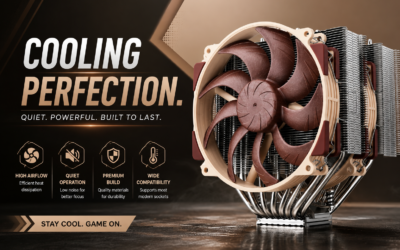
Sometimes the paste and dust are fine and the cooler itself is the bottleneck. A tiny stock cooler bundled with a mid-range chip can struggle badly the moment you throw a sustained load at it. So can an air cooler that’s been knocked loose, an AIO pump that’s failing, or a fan curve locked to silent mode in the BIOS. Check that the cooler doesn’t wobble, that an AIO’s pump is warm and the radiator fans respond under load, and that your BIOS fan profile ramps up instead of staying quiet at all costs.
High-core-count chips are the ones that punish weak cooling hardest. A processor like the Intel Core i9-14900K, currently around $469 and rated 4.7 stars, pushes serious heat under an all-core load and really wants a strong 240mm or 360mm AIO or a large dual-tower air cooler. If you’re pairing a hot flagship with an entry-level cooler, no amount of repasting saves you, the cooler simply can’t move the watts. Match the cooler to the chip. That’s usually the difference between 95C and a comfortable 78C.
Orientation matters too. In an air-cooled build the cooler fan should push air toward the rear exhaust, not fight it. In an AIO build, mounting the radiator with the tubes at the bottom helps keep air out of the pump over time. And double-check the plastic film. It’s rare, but we’ve read owner reports of someone leaving the protective sticker on a cooler’s cold plate, which blocks contact entirely and sends temps straight to 100C at idle. If your temps went bad right after a fresh build or a cooler swap, look there first.

Pros
- Industry-leading 6.0GHz out-of-the-box boost clock for single-threaded applications.
- Massive 32-thread capacity excels in multi-threaded workloads like 4K video rendering and 3D modeling.
- Compatible with existing LGA 1700 motherboards via BIOS updates, extending the life of 600-series boards.
- Integrated Intel UHD Graphics 770 provides a fallback for troubleshooting and QuickSync hardware acceleration.
- Highly binned silicon offers significant tuning potential for users with high-end cooling solutions.
Cons
- High 253W maximum turbo power requires premium 360mm or 420mm AIO liquid cooling for sustained loads.
- Aggressive stock voltage curves can lead to thermal throttling on standard air coolers or entry-level AIOs.
- Final generation for the LGA 1700 socket, limiting future CPU upgrade paths without a motherboard change.
- Significant power draw necessitates a high-quality PSU with sufficient 12V EPS overhead.
The Intel Core i9-14900K represents the enthusiast-tier peak of the Raptor Lake Refresh lineup, targeting professional creators and gamers who require the highest possible clock speeds. With 24 cores and 32 threads, it is designed to handle simultaneous gaming, streaming, and recording without the performance degradation typically seen on lower-core-count processors.
Technical performance is defined by its 6.0GHz Thermal Velocity Boost, a milestone frequency that pushes the limits of the LGA 1700 platform. In real-world gaming, this translates to high frame ceilings in 1080p and 1440p scenarios, while the 16 Efficient-cores provide the necessary throughput for background tasks and heavy multi-threaded productivity suites like Adobe Premiere Pro and DaVinci Resolve.
Build quality and reliability are consistent with Intel's high-end silicon, though the chip is notoriously demanding regarding thermals. The integrated heat spreader (IHS) must dissipate significant heat during 250W+ bursts, making the choice of thermal interface material and mounting pressure critical for maintaining stability under full load.
The primary trade-off for this level of performance is power consumption and heat. Users should expect the processor to hit its thermal junction maximum (TjMax) quickly during synthetic stress tests if paired with inadequate cooling. It is a processor that requires manual tuning of power limits (PL1 and PL2) to balance efficiency and performance effectively.
Final verdict: Buy this processor if you are an enthusiast with a high-end Z790 motherboard and a 360mm+ liquid cooler who needs the absolute fastest gaming and multitasking performance currently available on the Intel platform. Skip this if you prefer a plug-and-play experience with low power draw or are building in a small form factor case with limited cooling clearance.
| Cores / Threads | 24 (8P + 16E) / 32 |
| Max Turbo Frequency | 6.0 GHz |
| Intel Smart Cache (L3) | 36 MB |
| Total L2 Cache | 32 MB |
| Processor Base Power | 125 W |
| Max Turbo Power | 253 W (Listed as 250W in specs) |
| Socket Support | LGA 1700 |
| Memory Support | DDR5 5600 / DDR4 3200 |
| PCIe Lanes | 20 Total (Up to Gen 5.0) |
| Integrated Graphics | Intel UHD Graphics 770 |
Motherboard and Chipset: The i9-14900K requires an LGA 1700 socket. While it is compatible with older Z600-series motherboards, a BIOS update is mandatory for the system to POST. For optimal power delivery and PCIe 5.0 support, a high-end Z790 motherboard with robust VRMs is strongly recommended to handle the 250W+ power excursions.
Cooling Requirements: Due to the 6.0GHz boost clock and high TDP, air cooling is generally not recommended for this tier unless using a flagship dual-tower cooler with a contact frame. A 360mm or 420mm All-In-One (AIO) liquid cooler is the standard recommendation to prevent thermal throttling during intensive rendering or compilation tasks.
Memory Selection: This CPU supports both DDR4 and DDR5, but the motherboard determines which one you must use. For maximum performance in modern titles and professional apps, pairing this with a DDR5-7200+ kit on a Z790 platform is the ideal configuration, though DDR4 remains a viable cost-saving path for those upgrading from 12th gen.
Power Supply Guidance: Given the potential for 300W+ spikes from the CPU alone, especially when overclocked, a high-quality 850W or 1000W 80 Plus Gold PSU is recommended. Ensure your PSU has at least two 8-pin EPS (CPU) connectors to provide stable voltage to the motherboard's power phases.
Operating System: To properly utilize the Intel Thread Director and the hybrid core architecture, Windows 11 is the recommended operating system. Windows 10 may not efficiently schedule tasks between the P-cores and E-cores, potentially leading to inconsistent performance in multitasking scenarios.
Preventive maintenance
Once your temps are back in line, a little routine keeps them there. Blow the dust out every three to six months, more often with pets or carpet. Repaste every two to three years, or whenever you remove the cooler for any reason. Keep intake filters clean and give the case a few inches of breathing room on the intake side. Set a sane fan curve in BIOS that trades a bit of noise for cooler silicon under load. None of this is hard. It’s the difference between a PC that runs quiet for years and one that throttles by summer.
It’s also worth watching your temps once a month with the same monitoring app you used earlier. Numbers creeping up slowly is the earliest warning that dust is building or paste is aging, and catching it early means a ten-minute clean instead of an emergency shutdown mid-game. If you added new fans or a new GPU recently, recheck airflow balance too, since a power-hungry graphics card dumps a lot of heat right next to the CPU and can quietly raise its idle temp by several degrees.
When to call a pro vs DIY
Cleaning, repasting, and reseating a cooler are all safe DIY jobs for anyone comfortable opening a case. Where we’d suggest caution: if you suspect a bent CPU socket pin, a failing AIO pump under warranty, or damage from a liquid-cooler leak, that’s worth a second set of hands or a warranty claim before you make it worse. If you’ve cleaned, repasted, confirmed the cooler is mounted right, and temps still spike instantly, the problem may be the chip’s mounting mechanism, the motherboard VRM, or a genuinely defective processor. At that point a shop can diagnose it faster than trial and error.
When it’s not fixable: what to replace
If you’ve ruled out dust, paste, and cooler mounting and the chip still runs dangerously hot at stock settings, the processor itself may be degraded or defective, especially if it’s been run hard under a poor cooler for a long time. Before you spend, sanity-check by resetting all BIOS overclocks and power limits to stock, since an aggressive undervolt gone wrong or a manual voltage bump can cook a healthy chip. If stock settings don’t rescue it, replacement is the honest answer.
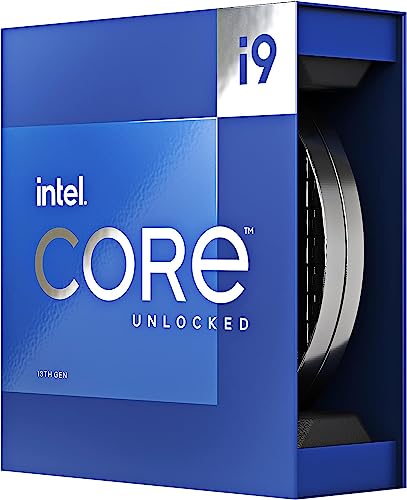
For a high-end rebuild, the Intel Core i9-13900K is a proven 24-core option, with 8 performance cores plus 16 efficiency cores, 36M of cache, and boost up to 5.8 GHz. It’s rated 4.8 stars and sits around $587.77. It’s a lot of chip, and like any flagship it demands strong cooling, so budget for a capable AIO in the same purchase. If your needs are more modest, don’t overbuy. Our guides to the best budget CPU 2026 and the best CPU for streaming cover cooler-running, lower-power parts that are easier to keep in check.
Pros
- Massive multi-threaded performance for 4K video editing, 3D rendering, and complex data science workloads.
- High 5.8 GHz peak frequency provides excellent single-core performance for gaming and CAD applications.
- Integrated UHD Graphics 770 serves as a reliable backup for troubleshooting or non-gaming productivity setups.
- Broad platform compatibility across two motherboard generations and two different memory standards.
Cons
- High 125W base power and significant peak wattage require a high-end 360mm AIO or custom loop cooling.
- Requires a BIOS update on many Intel 600 series motherboards before the system will POST.
- Platform longevity is limited as LGA1700 is an established socket nearing the end of its release cycle.
The Intel Core i9-13900K represents the pinnacle of the 13th Gen Raptor Lake lineup, positioned as a flagship solution for users who refuse to compromise. With a total of 24 cores and 32 threads, it is specifically engineered for enthusiast gamers, streamers, and heavy content creators who frequently run demanding applications like Adobe Premiere Pro, DaVinci Resolve, or Blender.
The standout technical achievement here is the refined hybrid architecture. By pairing 8 high-frequency Performance-cores with 16 Efficiency-cores, the 13900K manages heavy compute loads without sacrificing the responsiveness of background applications. In real-world gaming, this typically translates to higher 1% low frame rates and smoother overall performance, especially when multitasking with OBS or Discord in the background.
Thermal management is a critical consideration for this chip. While the 125W base power seems manageable, the processor is designed to scale its power consumption significantly to maintain the 5.8 GHz boost clock. Users should expect high operating temperatures under sustained all-core loads, necessitating a robust cooling solution and a high-airflow case to prevent thermal throttling.
An honest trade-off for this level of performance is the power draw and the resulting heat output. This is not a 'set and forget' chip for budget cooling or small form factor builds without careful undervolting or power limiting. Additionally, while the support for DDR4 is a welcome cost-saving measure, the highest performance tiers are only unlocked when paired with high-frequency DDR5 memory.
Buy this if you are building a top-tier workstation or gaming rig and already have a 360mm liquid cooler and a high-wattage power supply. Skip this if you are primarily gaming at 4K where the GPU is the bottleneck, or if you prefer a more power-efficient system with lower cooling requirements.
| Feature | Specification |
|---|---|
| Core Count | 24 (8 P-cores + 16 E-cores) |
| Thread Count | 32 |
| Max Turbo Frequency | 5.8 GHz |
| P-core Base Frequency | 3.0 GHz |
| E-core Base Frequency | 2.2 GHz |
| Intel Smart Cache (L3) | 36 MB |
| Total L2 Cache | 32 MB |
| Processor Base Power | 125 W |
| Memory Support | DDR5 5600 / DDR4 3200 |
| PCIe Revision | 5.0 and 4.0 |
| Total CPU PCIe Lanes | 20 |
| Socket Support | LGA1700 |
| Integrated Graphics | Intel UHD Graphics 770 |
Socket and Chipset: This processor uses the LGA1700 socket. It is natively compatible with Intel 700 series motherboards (Z790, H770, B760). While it works with 600 series boards (Z690, H670, B660, H610), a BIOS update is almost certainly required for the system to boot if the board was manufactured before the 13th Gen launch.
Cooling Requirements: Given the 5.8 GHz boost clock and high core count, a premium 360mm or 420mm All-In-One (AIO) liquid cooler is strongly recommended. High-end dual-tower air coolers may suffice for gaming but will likely lead to thermal throttling during intensive multi-threaded rendering or stress testing.
Memory Selection: The i9-13900K supports both DDR4 and DDR5, but this is determined by your motherboard choice. For a flagship build, pairing this CPU with DDR5 5600MT/s or higher is recommended to avoid bandwidth bottlenecks in memory-sensitive applications and modern games.
Power Supply Guidance: Due to the high transient power spikes typical of i9 processors, ensure your PSU has sufficient headroom. For a build featuring this CPU and a high-end GPU like an RTX 4080 or 4090, a minimum of an 850W or 1000W 80 Plus Gold power supply is advised.
Operating System: To properly utilize the Intel Thread Director for efficient task scheduling between P-cores and E-cores, Windows 11 is highly recommended. While Windows 10 is supported, it may not always assign tasks to the optimal core type, potentially impacting performance.
Tools and parts needed
You don’t need much. A can of compressed air, a tube of quality thermal paste, isopropyl alcohol at 90% or higher, a lint-free cloth, and a Phillips screwdriver cover the whole job. A cheap temperature monitoring app rounds it out. Total spend for the cleaning and repaste route is usually under twenty-five dollars. Compare that to a new cooler or a new CPU, and it’s clear why we push the free and cheap fixes first.
A few more questions
What CPU temperature is too high?
Under load, most modern desktop CPUs are fine into the high 80s and even low 90s, since they’re built to throttle around 95-100C to protect themselves. The problem isn’t hitting 90C briefly, it’s sitting pinned at 100C and throttling constantly. If you idle above 50C or spike to 100C within seconds of any load, something’s wrong and it’s worth investigating.
Can I fix overheating without opening my PC?
Partly. You can improve room airflow, raise the PC off carpet, set a more aggressive fan curve in BIOS, and reset any overclock to stock. Those steps help. But dust removal and repasting both require opening the case, and those two fixes solve the majority of overheating cases we researched. If temps are severe, you’ll eventually need to pop that side panel.
How often should I replace thermal paste?
Every two to three years is a safe rule for most builds, or any time you remove the cooler for cleaning or a swap. Paste dries out slowly, so a gradual temperature climb over several years often points straight to it. A single tube is cheap and covers multiple applications, so there’s no reason to stretch it past its useful life.















Write Your Review
No reviews yet. Be the first to share your experience!