

If you’ve shopped for a gaming CPU lately, you’ve bumped into a chip that costs more than its core count suggests and somehow wins benchmarks anyway. That’s the 3D V-Cache effect. It’s a packaging trick that stacks extra cache memory on top of the processor, and in the right games it’s worth more than raw clock speed. Our research into the best gaming CPUs keeps landing on cache-heavy parts for one plain reason: modern games are starving for it.
This guide breaks down what 3D V-Cache actually is, why it helps some workloads and not others, and how to tell if you’d feel the difference. No jargon walls. Just what the extra cache does for your PC and when it’s worth paying for, with a few detours through our gaming CPU picks along the way.
The short answer
3D V-Cache is a chunk of extra L3 cache memory bonded vertically onto the CPU die, tripling the amount of fast memory the cores can reach without going out to system RAM. Cache is the CPU’s scratchpad. The bigger it is, the more game data stays close, and the less time cores waste waiting on slower RAM. That waiting is the hidden tax on frame rates, and V-Cache slashes it.

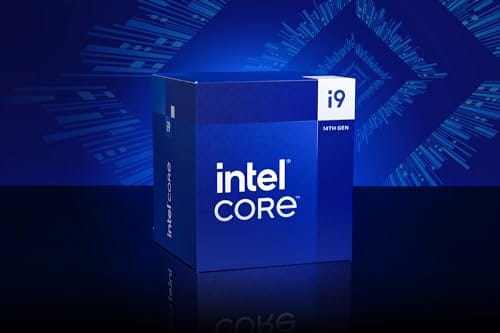
It’s not magic and it’s not for everything. It shines in games and simulations that thrash a lot of data. For a plain productivity or high-clock workload, a fast conventional chip like the Intel Core i9-14900K at $469, rated 4.7 by owners, can match or beat it. Cache is a targeted tool, not a universal upgrade.

Pros
- Industry-leading 6.0GHz out-of-the-box boost clock for single-threaded applications.
- Massive 32-thread capacity excels in multi-threaded workloads like 4K video rendering and 3D modeling.
- Compatible with existing LGA 1700 motherboards via BIOS updates, extending the life of 600-series boards.
- Integrated Intel UHD Graphics 770 provides a fallback for troubleshooting and QuickSync hardware acceleration.
- Highly binned silicon offers significant tuning potential for users with high-end cooling solutions.
Cons
- High 253W maximum turbo power requires premium 360mm or 420mm AIO liquid cooling for sustained loads.
- Aggressive stock voltage curves can lead to thermal throttling on standard air coolers or entry-level AIOs.
- Final generation for the LGA 1700 socket, limiting future CPU upgrade paths without a motherboard change.
- Significant power draw necessitates a high-quality PSU with sufficient 12V EPS overhead.
The Intel Core i9-14900K represents the enthusiast-tier peak of the Raptor Lake Refresh lineup, targeting professional creators and gamers who require the highest possible clock speeds. With 24 cores and 32 threads, it is designed to handle simultaneous gaming, streaming, and recording without the performance degradation typically seen on lower-core-count processors.
Technical performance is defined by its 6.0GHz Thermal Velocity Boost, a milestone frequency that pushes the limits of the LGA 1700 platform. In real-world gaming, this translates to high frame ceilings in 1080p and 1440p scenarios, while the 16 Efficient-cores provide the necessary throughput for background tasks and heavy multi-threaded productivity suites like Adobe Premiere Pro and DaVinci Resolve.
Build quality and reliability are consistent with Intel's high-end silicon, though the chip is notoriously demanding regarding thermals. The integrated heat spreader (IHS) must dissipate significant heat during 250W+ bursts, making the choice of thermal interface material and mounting pressure critical for maintaining stability under full load.
The primary trade-off for this level of performance is power consumption and heat. Users should expect the processor to hit its thermal junction maximum (TjMax) quickly during synthetic stress tests if paired with inadequate cooling. It is a processor that requires manual tuning of power limits (PL1 and PL2) to balance efficiency and performance effectively.
Final verdict: Buy this processor if you are an enthusiast with a high-end Z790 motherboard and a 360mm+ liquid cooler who needs the absolute fastest gaming and multitasking performance currently available on the Intel platform. Skip this if you prefer a plug-and-play experience with low power draw or are building in a small form factor case with limited cooling clearance.
| Cores / Threads | 24 (8P + 16E) / 32 |
| Max Turbo Frequency | 6.0 GHz |
| Intel Smart Cache (L3) | 36 MB |
| Total L2 Cache | 32 MB |
| Processor Base Power | 125 W |
| Max Turbo Power | 253 W (Listed as 250W in specs) |
| Socket Support | LGA 1700 |
| Memory Support | DDR5 5600 / DDR4 3200 |
| PCIe Lanes | 20 Total (Up to Gen 5.0) |
| Integrated Graphics | Intel UHD Graphics 770 |
Motherboard and Chipset: The i9-14900K requires an LGA 1700 socket. While it is compatible with older Z600-series motherboards, a BIOS update is mandatory for the system to POST. For optimal power delivery and PCIe 5.0 support, a high-end Z790 motherboard with robust VRMs is strongly recommended to handle the 250W+ power excursions.
Cooling Requirements: Due to the 6.0GHz boost clock and high TDP, air cooling is generally not recommended for this tier unless using a flagship dual-tower cooler with a contact frame. A 360mm or 420mm All-In-One (AIO) liquid cooler is the standard recommendation to prevent thermal throttling during intensive rendering or compilation tasks.
Memory Selection: This CPU supports both DDR4 and DDR5, but the motherboard determines which one you must use. For maximum performance in modern titles and professional apps, pairing this with a DDR5-7200+ kit on a Z790 platform is the ideal configuration, though DDR4 remains a viable cost-saving path for those upgrading from 12th gen.
Power Supply Guidance: Given the potential for 300W+ spikes from the CPU alone, especially when overclocked, a high-quality 850W or 1000W 80 Plus Gold PSU is recommended. Ensure your PSU has at least two 8-pin EPS (CPU) connectors to provide stable voltage to the motherboard's power phases.
Operating System: To properly utilize the Intel Thread Director and the hybrid core architecture, Windows 11 is the recommended operating system. Windows 10 may not efficiently schedule tasks between the P-cores and E-cores, potentially leading to inconsistent performance in multitasking scenarios.
The longer explanation
Every CPU has a memory hierarchy: tiny fast registers, then L1, L2, and L3 cache, then system RAM way out at the slow end. When a core needs data that isn’t in cache, it stalls and fetches from RAM, and that round trip costs dozens of nanoseconds. In a fast-paced game pushing hundreds of frames per second, those stalls pile up into lost frames and stutter.
A normal high-end desktop chip carries somewhere around 32 to 36MB of L3 cache. The Intel Core i9-13900K, for instance, lists 36M of cache across its 24 cores. A 3D V-Cache chip stacks an extra die of cache on top and pushes that pool toward 96MB or more. That’s roughly triple the on-chip memory. Suddenly whole chunks of a game’s working set fit inside the processor, the stalls shrink, and the frame rate rises even though the clock speed didn’t budge. That’s the core idea: feed the cores faster, not just clock them higher.
That is why two CPUs with similar core counts can feel very different. The spec sheet might show fewer peak GHz on the cache-stacked part, yet the game loop spends less time stalled and more time doing work. In a spreadsheet that looks backward. On a high-refresh monitor it makes sense fast.
How it works
The clever part is the stacking itself. Instead of spreading cache out sideways on the die, which eats space and lengthens the wires signals travel, the extra cache sits directly above the existing L3 and connects through thousands of tiny vertical links called through-silicon vias. Short paths mean fast, low-power access. The cache behaves as one big pool, not a bolted-on afterthought.
There’s a physics cost, though, and it explains a lot of the tradeoffs. The stacked cache die sits between the compute cores and the cooler, so heat has a harder time escaping. To keep temperatures safe, cache-stacked chips often run at slightly lower peak clocks and voltage limits than their non-stacked siblings. So you’re trading a sliver of raw frequency for a mountain of cache. In games, that trade pays off. In a pure clock-speed sprint, it doesn’t.
Why it works this way
Games are unusually cache-hungry because they touch scattered data constantly: physics states, AI logic, draw calls, world geometry, all jumping around memory dozens of times per frame. That access pattern punishes any stall. When more of that data lives in cache, the CPU stops tripping over RAM latency and the 1% low frame rates, the ones you actually feel as smoothness, climb the most.
Simulation-heavy titles show the biggest jumps. Think large strategy maps, flight sims, factory builders, anything modeling thousands of objects at once. Those working sets are big and messy, exactly what a fat cache absorbs. Meanwhile a video export or a code compile streams through data in a predictable line, so it barely benefits, and a chip that clocks higher wins there instead. That’s why cache is a scalpel, not a hammer.
When you’d want this
You’d want a cache-stacked chip if gaming is your main event, especially at 1080p or 1440p with a strong GPU where the CPU is what limits your frames. If you live in simulation games, competitive shooters chasing high refresh rates, or heavily modded worlds, the extra cache is the single best CPU upgrade you can make. It’s also a great match for anyone who wants top-tier frames without pushing power draw sky-high, since these chips sip less than a maxed-out clock monster.
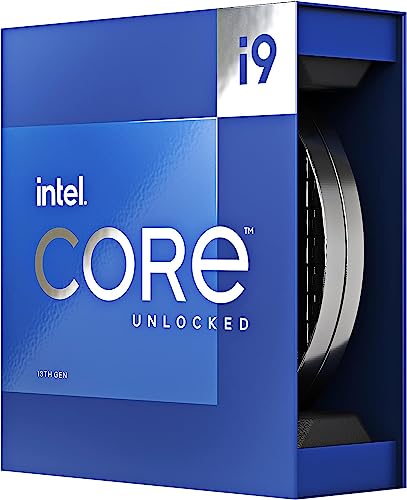
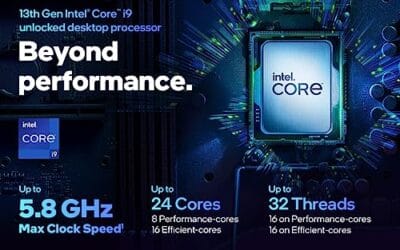
You’d skip it if your daily grind is rendering, compiling, or streaming plus productivity, where core count and clock speed rule. A conventional flagship like the Intel Core i9-13900K at $587.77, with 24 cores split into 8 P-cores and 16 E-cores and boosting up to 5.8 GHz, is the stronger all-rounder for mixed work. Its 4.8 owner rating reflects how well it juggles heavy multitasking. If you both game and grind, weigh how much of each you actually do. Our streaming CPU guide digs into that balance.
Pros
- Massive multi-threaded performance for 4K video editing, 3D rendering, and complex data science workloads.
- High 5.8 GHz peak frequency provides excellent single-core performance for gaming and CAD applications.
- Integrated UHD Graphics 770 serves as a reliable backup for troubleshooting or non-gaming productivity setups.
- Broad platform compatibility across two motherboard generations and two different memory standards.
Cons
- High 125W base power and significant peak wattage require a high-end 360mm AIO or custom loop cooling.
- Requires a BIOS update on many Intel 600 series motherboards before the system will POST.
- Platform longevity is limited as LGA1700 is an established socket nearing the end of its release cycle.
The Intel Core i9-13900K represents the pinnacle of the 13th Gen Raptor Lake lineup, positioned as a flagship solution for users who refuse to compromise. With a total of 24 cores and 32 threads, it is specifically engineered for enthusiast gamers, streamers, and heavy content creators who frequently run demanding applications like Adobe Premiere Pro, DaVinci Resolve, or Blender.
The standout technical achievement here is the refined hybrid architecture. By pairing 8 high-frequency Performance-cores with 16 Efficiency-cores, the 13900K manages heavy compute loads without sacrificing the responsiveness of background applications. In real-world gaming, this typically translates to higher 1% low frame rates and smoother overall performance, especially when multitasking with OBS or Discord in the background.
Thermal management is a critical consideration for this chip. While the 125W base power seems manageable, the processor is designed to scale its power consumption significantly to maintain the 5.8 GHz boost clock. Users should expect high operating temperatures under sustained all-core loads, necessitating a robust cooling solution and a high-airflow case to prevent thermal throttling.
An honest trade-off for this level of performance is the power draw and the resulting heat output. This is not a 'set and forget' chip for budget cooling or small form factor builds without careful undervolting or power limiting. Additionally, while the support for DDR4 is a welcome cost-saving measure, the highest performance tiers are only unlocked when paired with high-frequency DDR5 memory.
Buy this if you are building a top-tier workstation or gaming rig and already have a 360mm liquid cooler and a high-wattage power supply. Skip this if you are primarily gaming at 4K where the GPU is the bottleneck, or if you prefer a more power-efficient system with lower cooling requirements.
| Feature | Specification |
|---|---|
| Core Count | 24 (8 P-cores + 16 E-cores) |
| Thread Count | 32 |
| Max Turbo Frequency | 5.8 GHz |
| P-core Base Frequency | 3.0 GHz |
| E-core Base Frequency | 2.2 GHz |
| Intel Smart Cache (L3) | 36 MB |
| Total L2 Cache | 32 MB |
| Processor Base Power | 125 W |
| Memory Support | DDR5 5600 / DDR4 3200 |
| PCIe Revision | 5.0 and 4.0 |
| Total CPU PCIe Lanes | 20 |
| Socket Support | LGA1700 |
| Integrated Graphics | Intel UHD Graphics 770 |
Socket and Chipset: This processor uses the LGA1700 socket. It is natively compatible with Intel 700 series motherboards (Z790, H770, B760). While it works with 600 series boards (Z690, H670, B660, H610), a BIOS update is almost certainly required for the system to boot if the board was manufactured before the 13th Gen launch.
Cooling Requirements: Given the 5.8 GHz boost clock and high core count, a premium 360mm or 420mm All-In-One (AIO) liquid cooler is strongly recommended. High-end dual-tower air coolers may suffice for gaming but will likely lead to thermal throttling during intensive multi-threaded rendering or stress testing.
Memory Selection: The i9-13900K supports both DDR4 and DDR5, but this is determined by your motherboard choice. For a flagship build, pairing this CPU with DDR5 5600MT/s or higher is recommended to avoid bandwidth bottlenecks in memory-sensitive applications and modern games.
Power Supply Guidance: Due to the high transient power spikes typical of i9 processors, ensure your PSU has sufficient headroom. For a build featuring this CPU and a high-end GPU like an RTX 4080 or 4090, a minimum of an 850W or 1000W 80 Plus Gold power supply is advised.
Operating System: To properly utilize the Intel Thread Director for efficient task scheduling between P-cores and E-cores, Windows 11 is highly recommended. While Windows 10 is supported, it may not always assign tasks to the optimal core type, potentially impacting performance.
There’s also a budget angle. If you already own a strong graphics card and play CPU-heavy titles, paying extra for cache can be smarter than buying a pricier GPU that sits waiting. If your GPU is older or you’re gaming at 4K, flip that logic and fund the graphics card first. Bottlenecks decide value, not brand hype.
What to look for in a cache-heavy CPU
Start with the cache number itself. A gaming-focused chip advertising cache in the 90MB-plus range is carrying stacked cache, versus the roughly 32 to 36MB on a standard part. Then check clocks, since stacked chips trade a bit of frequency for that cache, and make sure the tradeoff fits your mix of games and work. Cooling matters too: the stacked die runs warm, so a solid air or liquid cooler keeps it happy.
Platform longevity is the last piece. Look at socket support and whether the board line promises future chip compatibility, because a cache-rich gaming chip is a part you’ll want to ride for years. Match it with fast RAM as well, since cache reduces RAM trips but doesn’t eliminate them.
Common misconceptions
The biggest myth is that more cache always means more speed. It doesn’t. If your workload already fits in a normal cache or streams data predictably, the extra pool sits idle and you paid for nothing. A pure productivity user can genuinely be better off with a higher-clocked conventional chip.
Another misread is that cache-stacked chips are fragile or run dangerously hot. They’re not. They just have a lower thermal ceiling by design, so they self-limit clocks to stay safe. Owners run them for years on ordinary coolers. And no, cache doesn’t replace RAM or VRAM. It’s a separate, tiny, blazing-fast tier that works with your memory, not instead of it.
For builders comparing AMD cache-stacked chips against Intel flagships, don’t read the shortcode cards as a direct V-Cache substitute. The Intel parts here are reference points for conventional high-clock CPUs with known prices and owner ratings. They help show the tradeoff: more frequency and cores on one side, more local game data on the other.
Frequently asked
Does 3D V-Cache help at 4K?
Less than at lower resolutions. At 4K the GPU usually becomes the bottleneck, so the CPU has slack and the cache advantage shrinks. You’ll still see it in CPU-bound sim games, but for most 4K titles a strong GPU matters more than the cache on your processor.
Is a cache-heavy chip good for productivity work?
It’s fine, not ideal. For rendering, compiling, and heavy multitasking, core count and clock speed drive results, so a conventional flagship like the i9-13900K with 24 cores often pulls ahead. If gaming is secondary, put your money into clocks and cores instead.
Do I need special cooling for stacked cache?
No exotic setup required, but don’t cheap out. The stacked die traps heat, so a competent air tower or a 240mm-plus liquid cooler keeps clocks steady. Skimpy cooling just makes the chip throttle sooner, costing you the frames you paid extra for.
Why is it more expensive than a regular CPU?
The vertical stacking process adds manufacturing steps and yield risk, and that shows up in the price. You’re paying for the packaging technology and the gaming performance it unlocks, not for more cores. Whether it’s worth it depends on how much you game.
Will more cache always beat higher clock speed?
Only when the workload is cache-sensitive, like many games and simulations. For predictable, streaming workloads, higher clocks win. The right pick isn’t about which spec is bigger, it’s about which one your actual software leans on.































Write Your Review
No reviews yet. Be the first to share your experience!